
Custom Trim vs. Standard Trim: What Homeowners Should Know Before Upgrading

June 15, 2026

Custom Trim or Standard Trim? What to Consider Before Upgrading

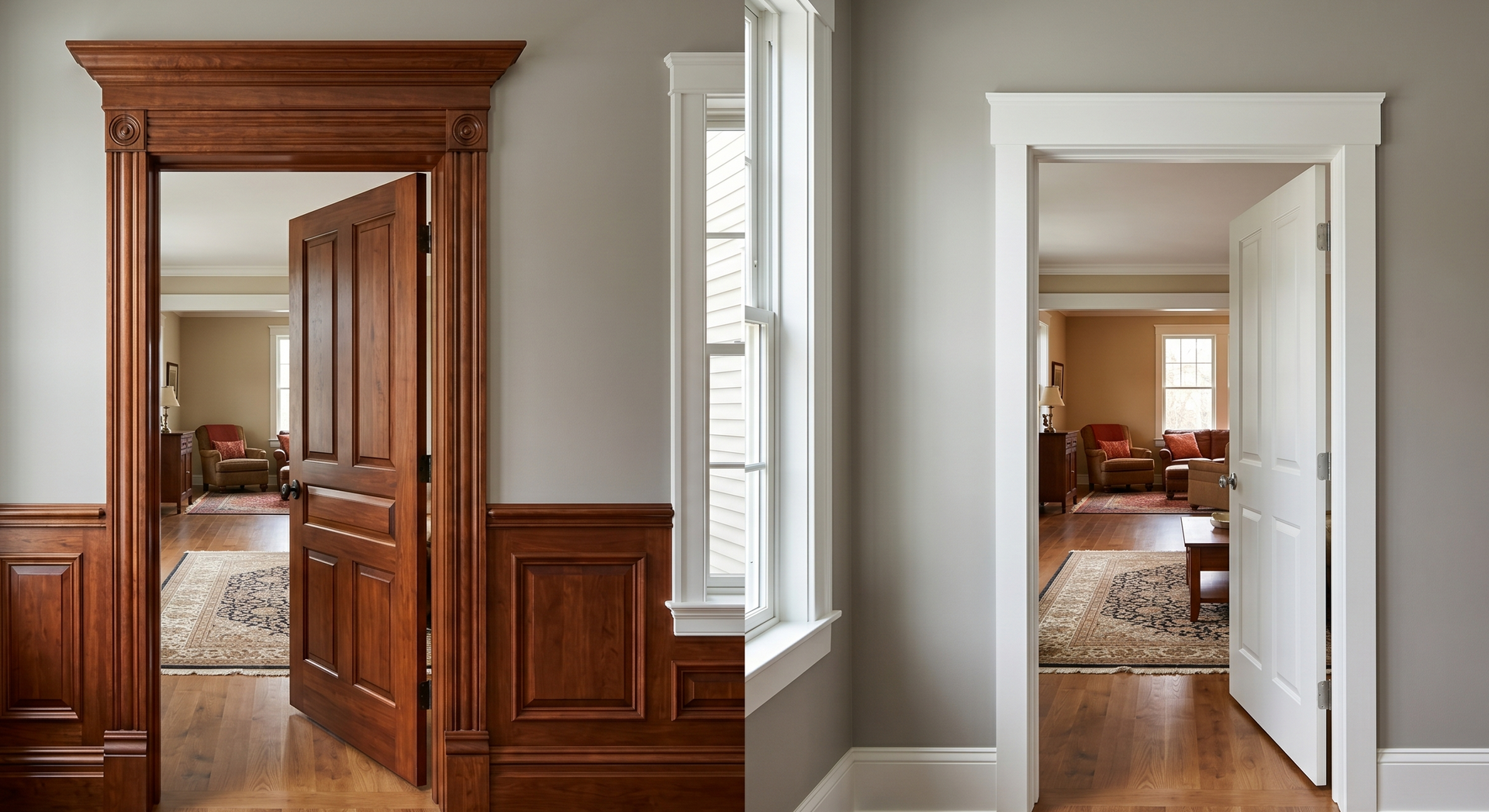
Before-and-after view of a doorway with dark wood trim changed to white trim in a room interior

Trim may seem like a small detail, but it plays a major role in defining how a home looks and feels. Baseboards, door casing, window trim, crown molding, and transitions are present in nearly every room. When homeowners consider upgrading their interiors, one of the most common questions is whether custom trim is truly worth the investment compared to standard trim.

At Blackhills Finish Carpentry, we’ve worked in homes throughout Hill City, Rapid City, and the Black Hills where homeowners lived with standard trim for years before deciding to upgrade. In nearly every case, the difference was immediately noticeable — not just visually, but in how the home felt as a whole.

Here’s what homeowners should understand about the differences between custom trim and standard trim before making a decision.

1. What Standard Trim Really Is

Standard trim is typically selected by builders to meet basic requirements while keeping costs low. It is mass-produced, limited in profile options, and installed quickly.

Common characteristics of standard trim include:

  • Thin baseboards and narrow casing
  • Limited profile choices
  • Low-density MDF or composite materials
  • Minimal customization
  • Fast installation with heavy reliance on caulk

Standard trim is designed to be acceptable, not exceptional.

2. What Makes Trim “Custom”

Custom trim is designed and installed specifically for your home. It is selected based on ceiling height, room size, architectural style, and homeowner preference.

Custom trim typically features:

  • Taller baseboards scaled to the space
  • Wider door and window casing
  • Profile selections that match the home’s style
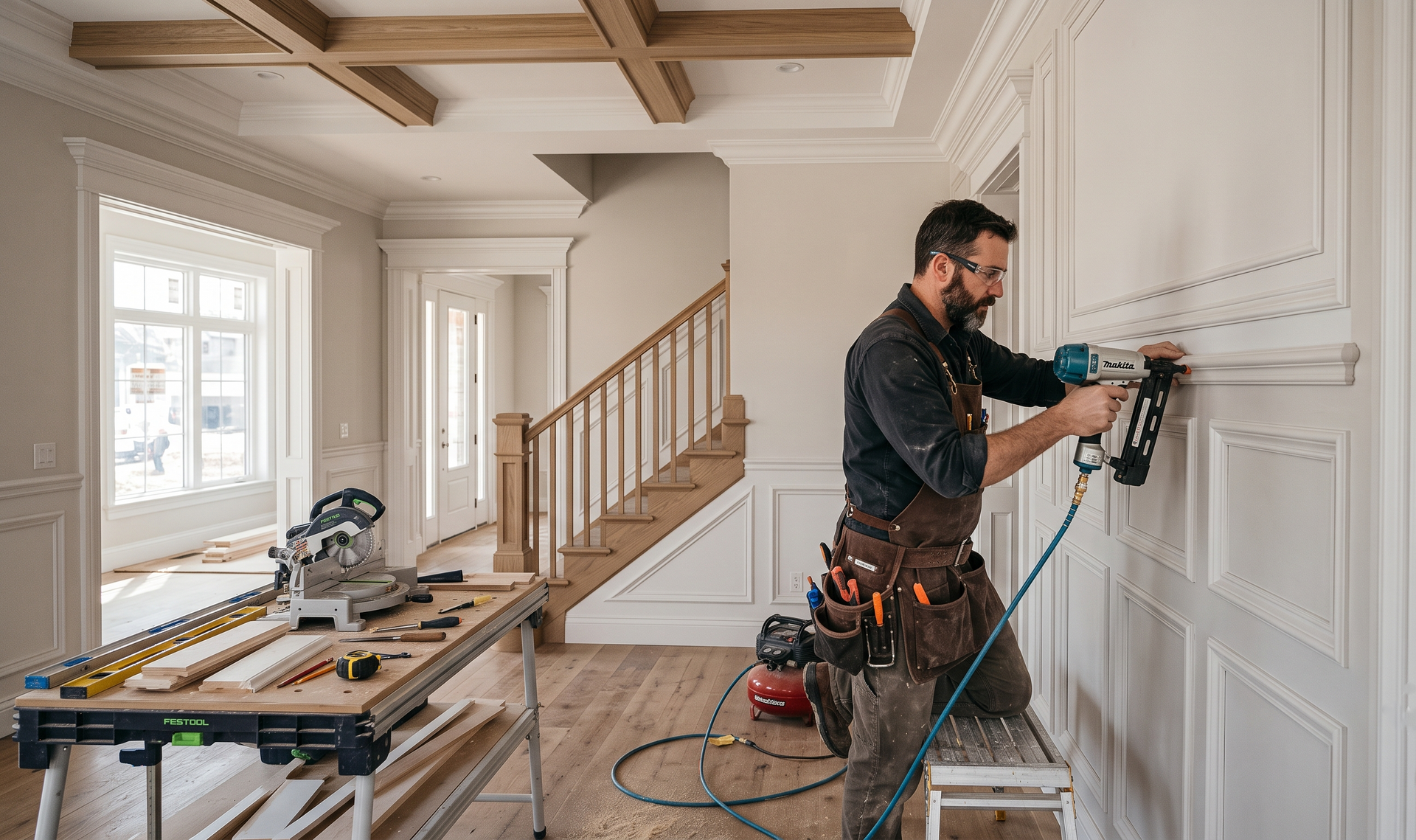
  • Clean, precise joints
  • Materials chosen for durability and appearance

Custom trim is not about decoration alone — it’s about proportion, balance, and craftsmanship.

3. Visual Impact Is Immediate

One of the most noticeable differences between standard and custom trim is how quickly it changes the look of a room.

Standard trim often disappears visually. Custom trim creates definition.

Upgraded trim:

  • Grounds walls visually
  • Adds depth to flat surfaces
  • Frames doors and windows more intentionally
  • Makes ceilings feel taller

Many homeowners are surprised by how dramatic the improvement feels without changing flooring or furniture.

4. Proportion Matters More Than Profile

Homeowners often focus on the trim profile itself, but proportion is even more important.

Standard trim is typically undersized for modern homes with higher ceilings.

Custom trim is selected based on:

  • Ceiling height
  • Wall length
  • Door and window size
  • Overall room scale

Proper proportions make a space feel balanced rather than top-heavy or sparse.

5. Material Quality Affects Durability

Standard trim is often made from low-density MDF or composite materials that are prone to damage.

These materials can:

  • Dent easily
  • Swell with moisture
  • Chip at corners
  • Crack at joints

Custom trim uses higher-quality materials selected for the application, resulting in:

  • Stronger edges
  • Better paint or stain finish
  • Greater resistance to wear
  • Longer lifespan

Material quality directly affects how trim performs over time.

6. Installation Quality Is a Major Difference

Standard trim is installed quickly, often by multiple crews under tight deadlines.

This can lead to:

  • Uneven joints
  • Visible gaps
  • Excessive caulk
  • Inconsistent reveals

Custom trim installation takes time and precision.

It includes:

  • Careful layout and measuring
  • Tight joints that require minimal caulk
  • Clean alignment across rooms
  • Adjustments for uneven walls and floors

The difference is visible immediately and remains noticeable years later.

7. Custom Trim Improves Home Consistency

Many homes with standard trim suffer from inconsistency:

  • Different trim styles in different rooms
  • Mismatched baseboard heights
  • Poor transitions between spaces

Custom trim upgrades often involve creating a consistent trim plan for the entire home.

This results in:

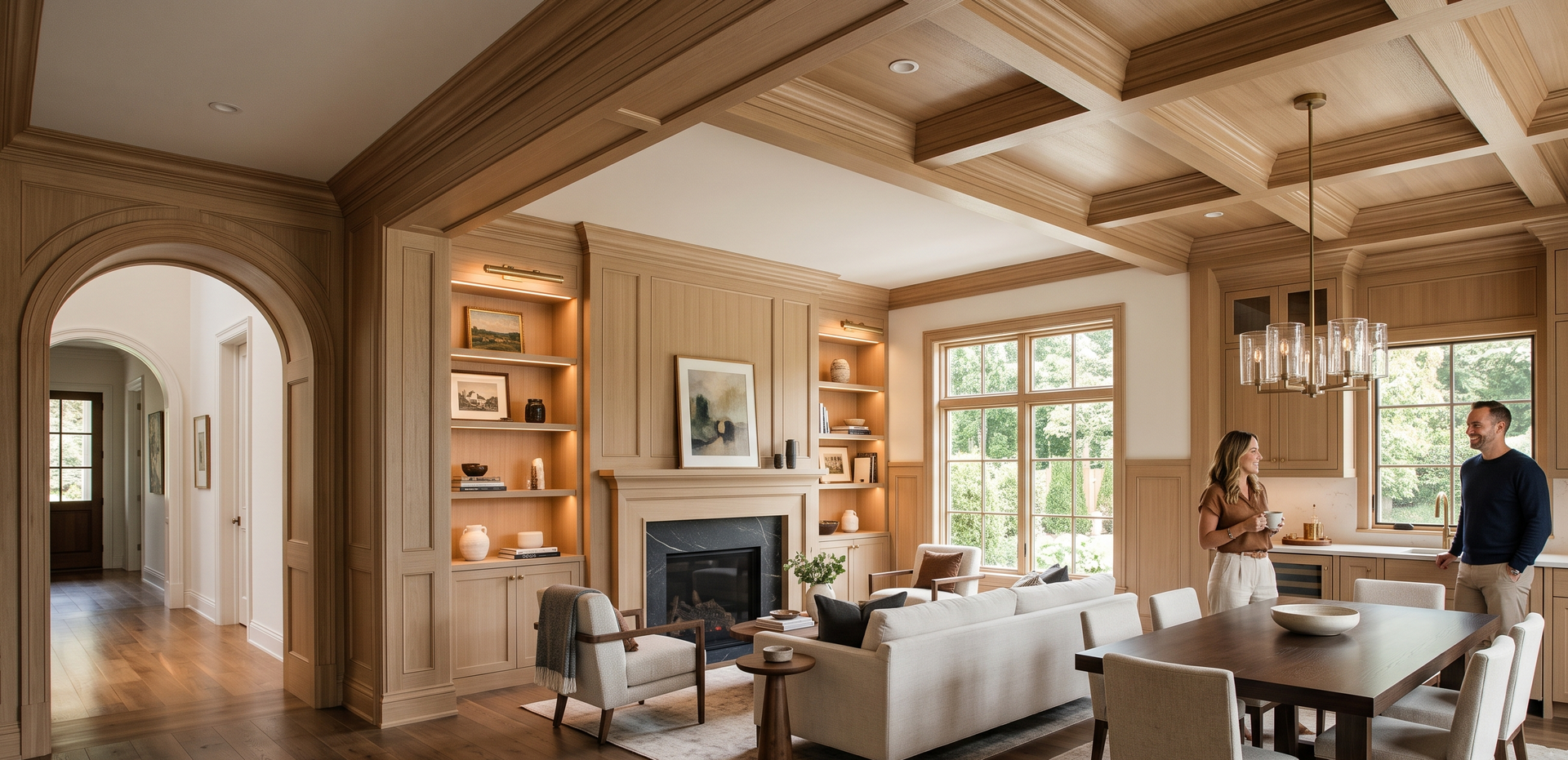
  • Smooth visual flow
  • Cohesive design
  • A more intentional feel
  • Improved resale appeal

Consistency is one of the most powerful yet overlooked benefits of custom trim.

8. Custom Trim Enhances Resale Value

Buyers may not know the difference between standard and custom trim by name, but they recognize quality when they see it.

Custom trim signals:

  • Professional craftsmanship
  • Attention to detail
  • A well-maintained home
  • Higher construction standards

Homes with upgraded trim often feel more finished and command stronger buyer interest.

9. Maintenance Differences Over Time

Standard trim often requires more frequent maintenance due to cracking joints, chipped edges, and damaged corners.

Custom trim, installed with proper techniques and materials, requires less ongoing attention.

This results in:

  • Fewer repairs
  • Less repainting
  • Better long-term appearance

Over time, custom trim often proves to be the more cost-effective choice.

10. Custom Trim Allows Design Flexibility

Standard trim limits homeowners to a small set of profiles and sizes.

Custom trim allows:

  • Flat stock or detailed profiles
  • Painted or stained finishes
  • Modern, traditional, or transitional styles
  • Coordination with cabinetry and built-ins

This flexibility ensures trim complements the home rather than feeling like an afterthought.

11. The Cost Difference in Perspective

While custom trim costs more than standard trim, the difference is often smaller than homeowners expect — especially when considering the visual impact.

Trim upgrades typically:

  • Cost less than flooring replacement
  • Deliver immediate aesthetic improvement
  • Affect every room visually
  • Add lasting value

When viewed as a whole-home upgrade, custom trim offers strong return on investment.

12. Custom Trim Makes a Home Feel Complete

Perhaps the biggest difference is how the home feels once custom trim is installed.

Homeowners often describe the result as:

  • More polished
  • More refined
  • More cohesive
  • More comfortable

Custom trim transforms a house from functional to finished.

Choosing the Right Trim for Your Home

The decision between standard and custom trim comes down to priorities. If speed and minimal cost are the primary goals, standard trim may suffice. If long-term quality, appearance, and value matter, custom trim is the clear choice.

At Blackhills Finish Carpentry, we help homeowners choose trim solutions that fit their home, style, and goals — with craftsmanship that lasts.

Ready to Upgrade Your Interior Trim?

If you’re considering replacing standard trim or planning a custom finish upgrade, we’re here to help.

Call: (605) 381-0298
Email: bfaehnrich6@yahoo.com
Serving: Hill City, Rapid City & the Black Hills
Hours: Monday – Friday, 7am – 5pm

Let’s create trim details that elevate your home.

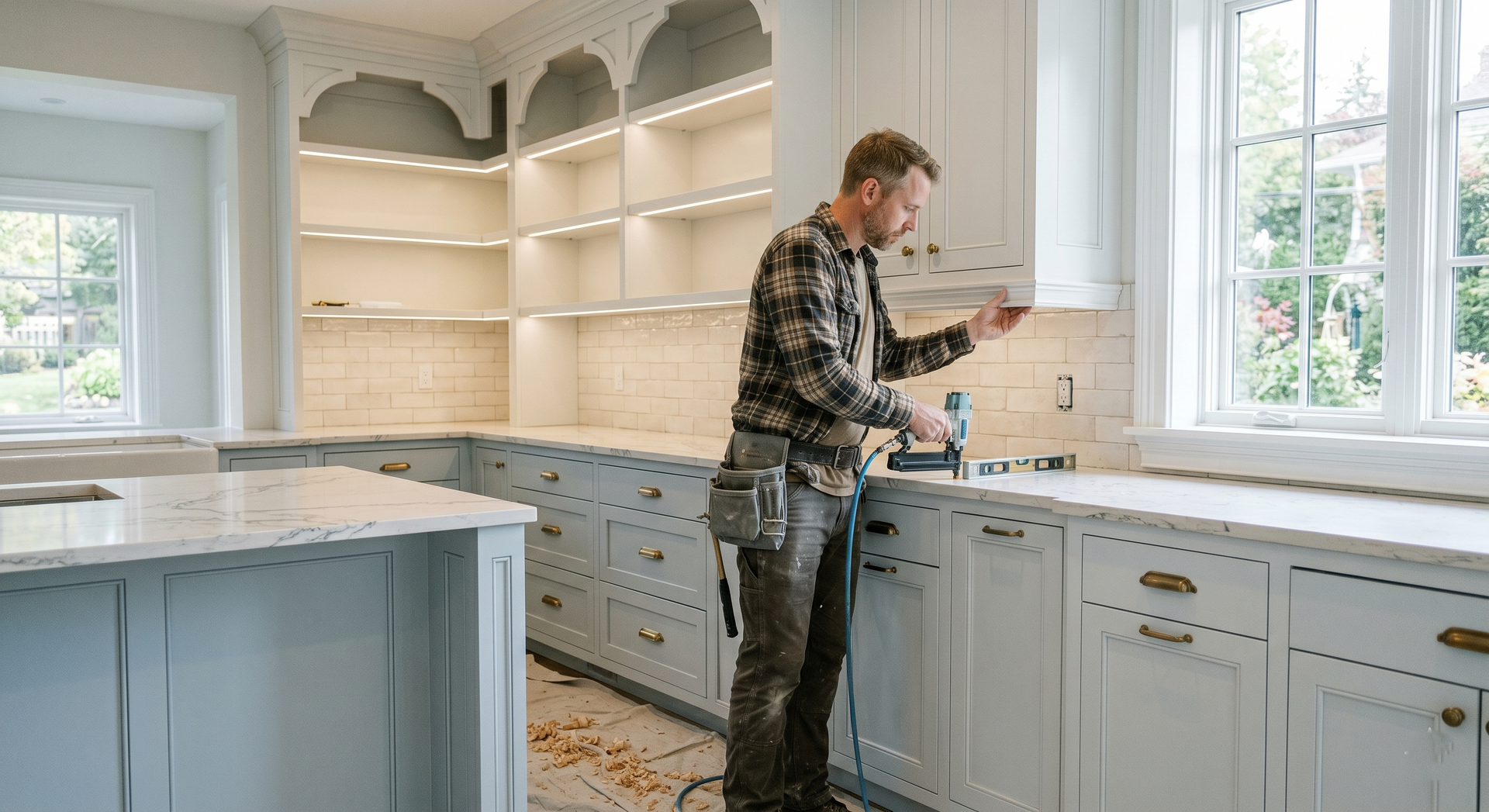
Person working at a bright kitchen counter with white cabinets and large windows
May 29, 2026
Discover how finish carpentry transforms kitchens through trim, built-ins, islands, and architectural details beyond cabinets and counters for custom style now!
Hands using a hand plane on wood beside chisels and sawdust in a woodworking workshop
May 14, 2026
Learn why material selection is critical in finish carpentry and how wood quality affects durability, appearance, maintenance, and long-term value for your home.!!

Person sanding a wooden board with a power sander in a workshop
April 29, 2026
Learn how custom finish carpentry helps homeowners age in place safely and comfortably with accessible features, while maintaining a beautiful, high-end home design.
A woodworker uses a hammer to drive a small nail into a piece of wood on a workshop workbench.
April 14, 2026
Learn how to properly care for and maintain custom finish carpentry. Simple tips to protect trim, built-ins, and cabinetry for decades.
March 30, 2026
Plan a whole-home finish carpentry upgrade step by step. Explore trim, built-ins, cabinetry, timelines, and budgeting tips for a polished, cohesive home finish.
A close-up of hands using a wooden marking gauge to measure a piece of timber on a workbench.
March 13, 2026
Learn how finish carpentry reduces noise and echo in your home. Discover how trim, built-ins, paneling, and architectural details improve acoustics and comfort.
Living room with fireplace, built-in shelving, neutral-toned furniture, and large windows with cream curtains.
February 27, 2026
Learn the key differences between builder-grade and custom finish carpentry, and why expert craftsmanship makes a lasting impact on quality, detail, and home value.
Real estate agent showing a couple a home; interior, daylight. The agent wears a suit, and the couple are smiling.
February 10, 2026
Learn how custom finish carpentry increases resale value, buyer appeal, and long-term equity for homes in Hill City and Rapid City, SD.
Dining room with light blue walls, wood floors, and white trim. Includes a chair, art, and a vase.
January 20, 2026
Interior trim details define the quality of your home. Learn how baseboards, casing, crown molding, and transitions elevate design and value.
House under construction on a dirt lot; unfinished frame, plywood walls, metal roof, blue sky.
January 5, 2026
Learn how strategic finish carpentry can make small homes feel larger. Trim, built-ins, lighting, and design techniques for South Dakota homes.
Show More