When homeowners think about kitchen upgrades, the conversation almost always starts with cabinets, countertops, and appliances. While those elements are essential, they don’t tell the whole story. What truly separates a standard kitchen from a custom, high-end space is finish carpentry.
Trim details, island construction, paneling, built-ins, and architectural transitions quietly shape how a kitchen looks, feels, and functions. These elements determine whether a kitchen feels assembled from parts or designed as a cohesive space.
At Blackhills Finish Carpentry, we’ve helped homeowners throughout Hill City, Rapid City, and the Black Hills transform kitchens that already had “nice cabinets” into kitchens that feel intentional, timeless, and built to last. Here’s how finish carpentry elevates kitchen design far beyond the basics.
1. The Kitchen Is an Architectural Space, Not Just a Work Zone
Modern kitchens are no longer isolated rooms. They flow into living spaces, dining areas, and entryways. That makes architectural consistency critical.
Finish carpentry helps kitchens:
- Blend seamlessly with surrounding rooms
- Maintain consistent trim profiles
- Feel grounded and proportional
- Avoid looking like a separate “box” within the home
Without proper finish details, even high-end kitchens can feel disconnected from the rest of the house.
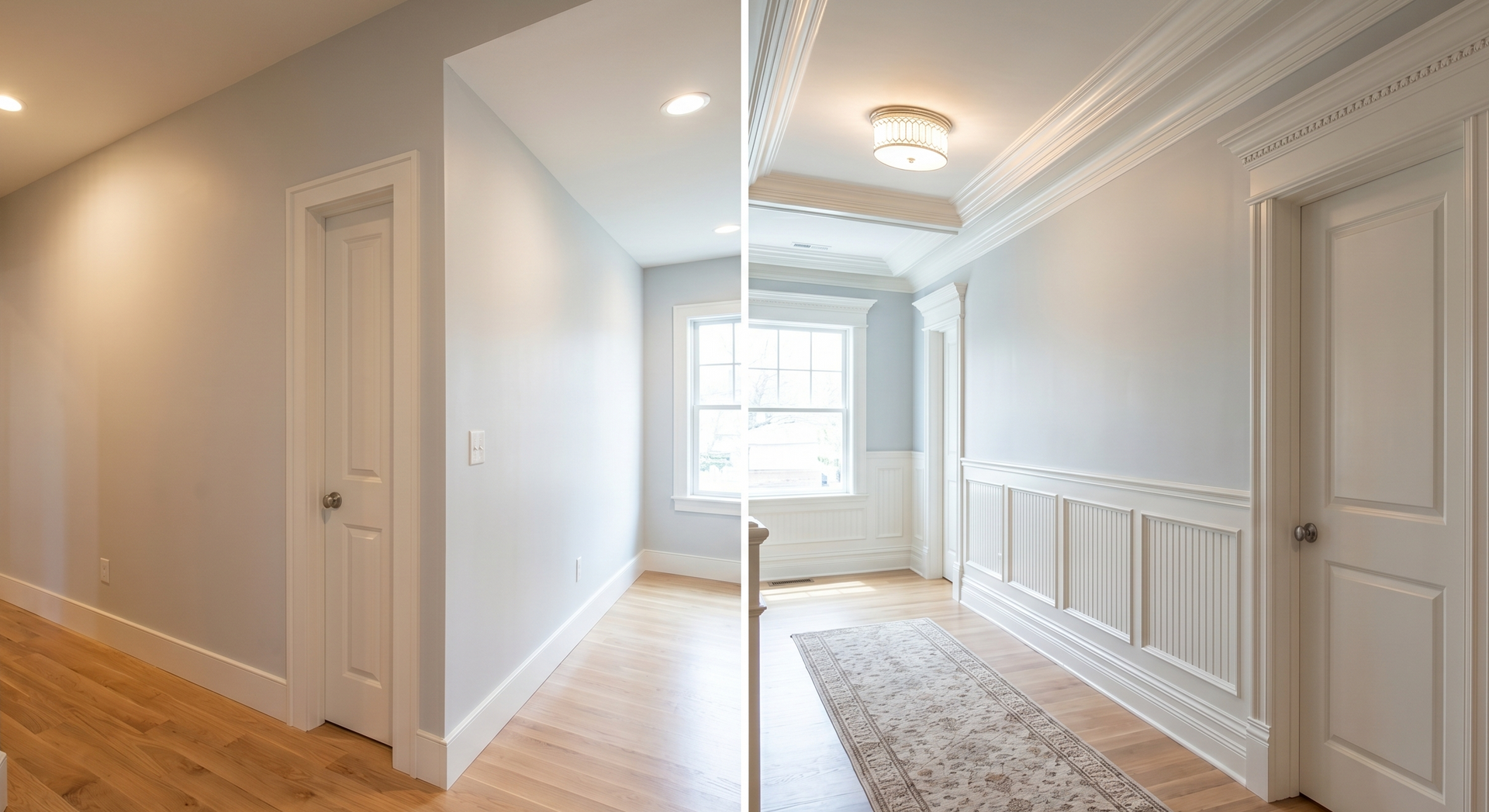
2. Trim Details Frame the Entire Kitchen
Baseboards, casing, and ceiling trim play a major role in kitchen design — even though they’re often overlooked.
Well-executed trim:
- Creates clean transitions between flooring and cabinetry
- Frames windows and doors for balance
- Adds visual weight to the space
- Complements cabinetry rather than competing with it
Builder-grade kitchens often use minimal trim to save time and cost. Custom trim elevates the space instantly.
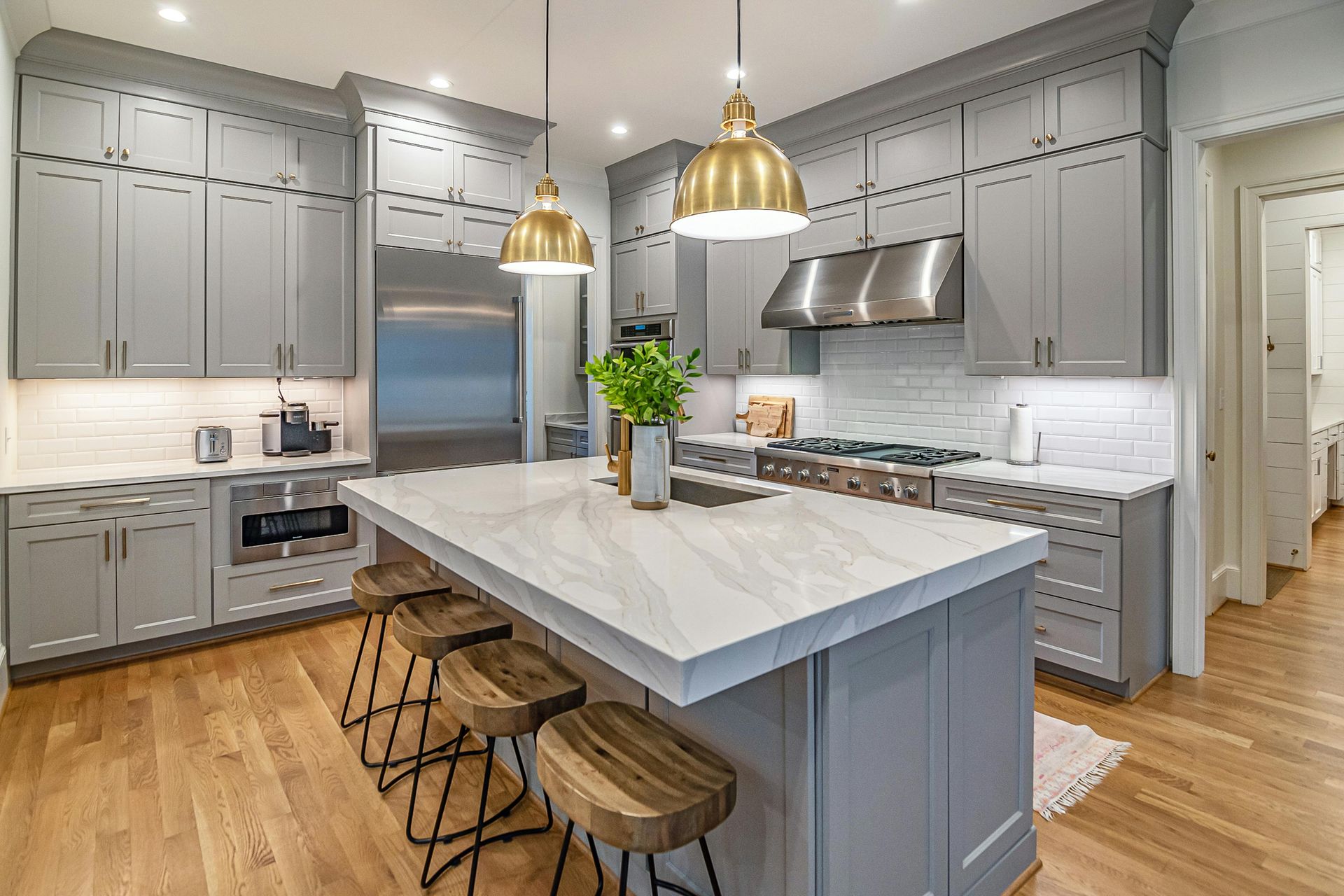
3. Kitchen Islands Are Finished Carpentry Projects
While islands are often thought of as cabinet components, truly custom islands are finish carpentry at their core.
A custom island may include:
- Furniture-style panels
- Decorative legs or columns
- Integrated trim and molding
- Waterfall or framed countertop edges
- Built-in seating or storage
These details transform the island from a simple workspace into the visual centerpiece of the kitchen.
4. Paneling and Wall Treatments Add Depth and Character
Flat drywall dominates many kitchens, but finish carpentry allows walls to contribute to the design.
Popular kitchen wall treatments include:
- Shiplap or tongue-and-groove accents
- Paneled backs of islands or peninsulas
- Wainscoting in breakfast nooks
- Framed accent walls
These elements add texture and warmth without overwhelming the space.
5. Custom Range Hoods Become Focal Points
In many kitchens, the range hood is one of the first things people notice. Off-the-shelf metal hoods often feel utilitarian rather than intentional.
Custom carpentry allows for:
- Wood-clad range hoods
- Trimmed and paneled enclosures
- Seamless integration with cabinetry
- Proportions that fit ceiling height and layout
A custom hood creates a strong visual anchor and reinforces the kitchen’s architectural style.
6. Built-In Storage Improves Function and Flow
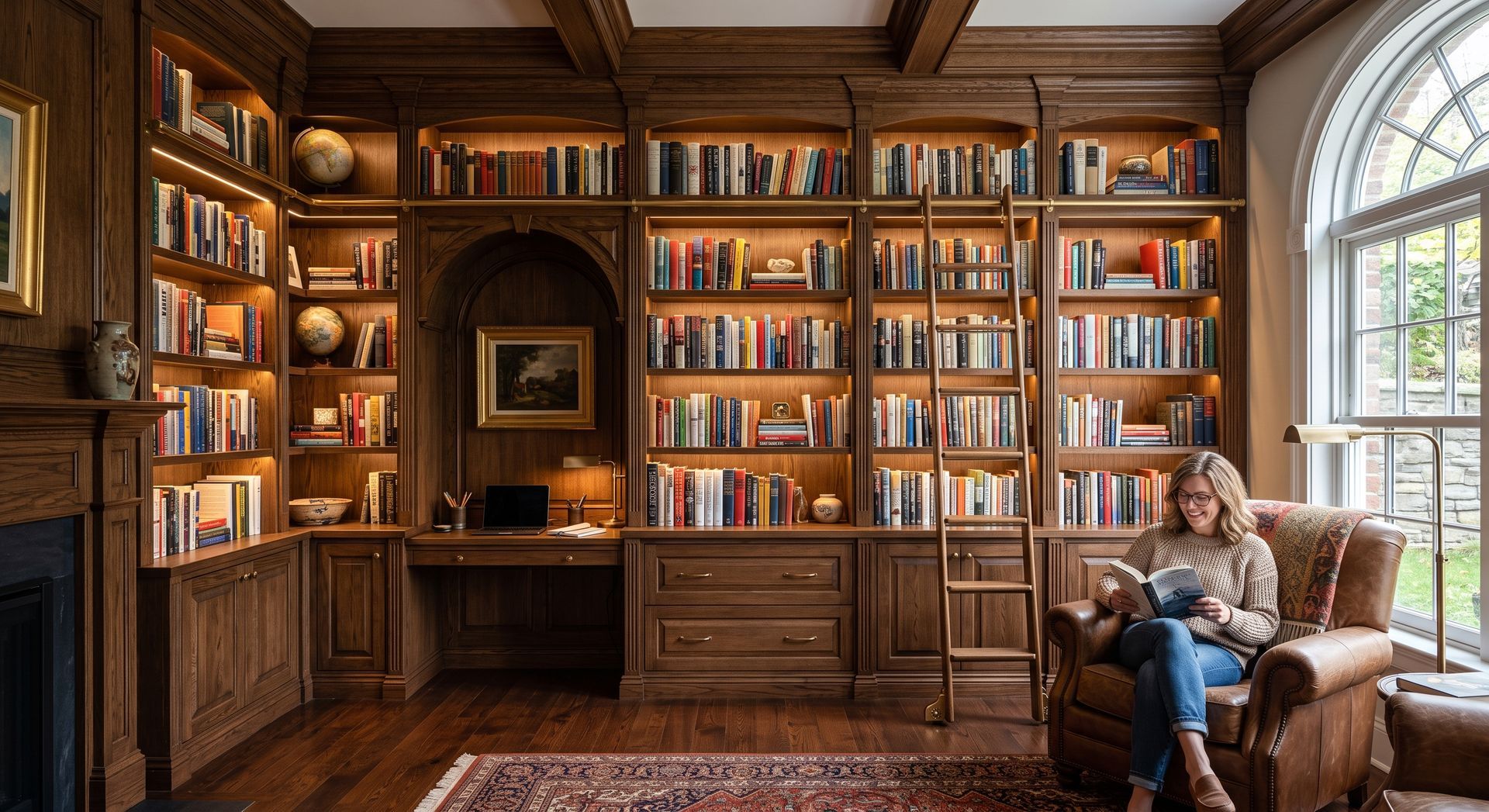
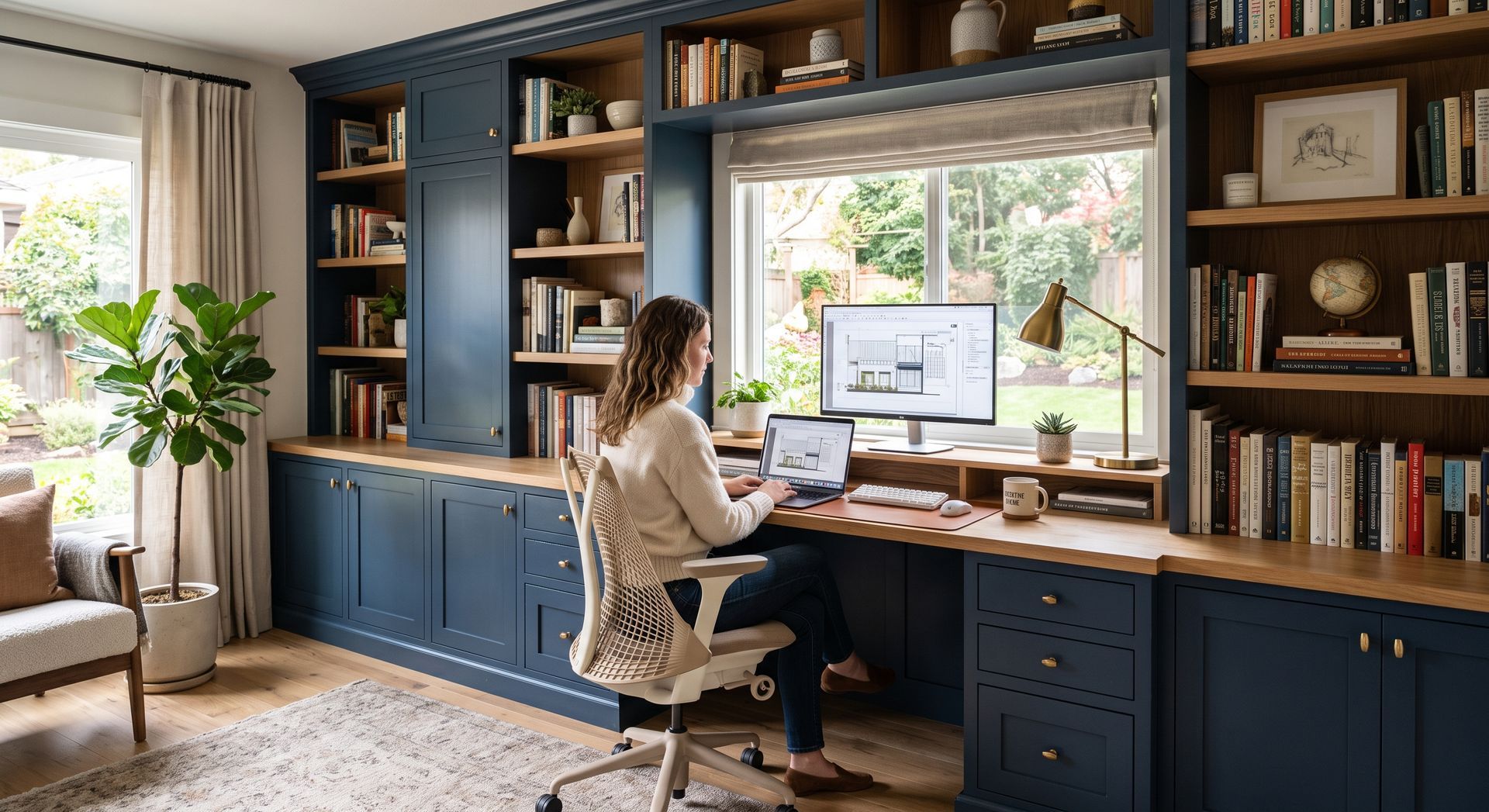
Finish carpentry allows storage solutions to be integrated rather than added as afterthoughts.
Examples include:
- Pantry walls with full-height cabinetry
- Appliance garages built into cabinetry runs
- Coffee stations framed with trim and shelving
- Banquette seating with hidden storage
These features improve daily usability while keeping the kitchen visually clean.
7. Ceiling Details Define Kitchen Boundaries
Ceilings are often ignored in kitchen design, but finish carpentry can use them to define space — especially in open layouts.
Ceiling upgrades may include:
- Coffered ceilings
- Beams or box beams
- Trimmed ceiling transitions
- Subtle soffit detailing
These features visually separate the kitchen from adjacent spaces without walls, maintaining openness while adding definition.
8. Finish Carpentry Enhances Lighting Design
Lighting and carpentry work together more than most homeowners realize.
Finish carpentry supports lighting by:
- Framing windows to maximize natural light
- Integrating under-cabinet lighting channels
- Providing surfaces that reflect or soften light
- Supporting accent lighting within shelving or niches
The result is a kitchen that feels brighter, warmer, and more inviting.
9. Trim Proportions Affect Perceived Scale
Kitchen proportions matter. Thin trim paired with large cabinets can make a space feel unbalanced.
Custom finish carpentry ensures:
- Trim scale matches cabinet size
- Island proportions feel grounded
- Vertical elements align visually
- The kitchen feels neither top-heavy nor sparse
These subtle adjustments dramatically improve how the space feels.
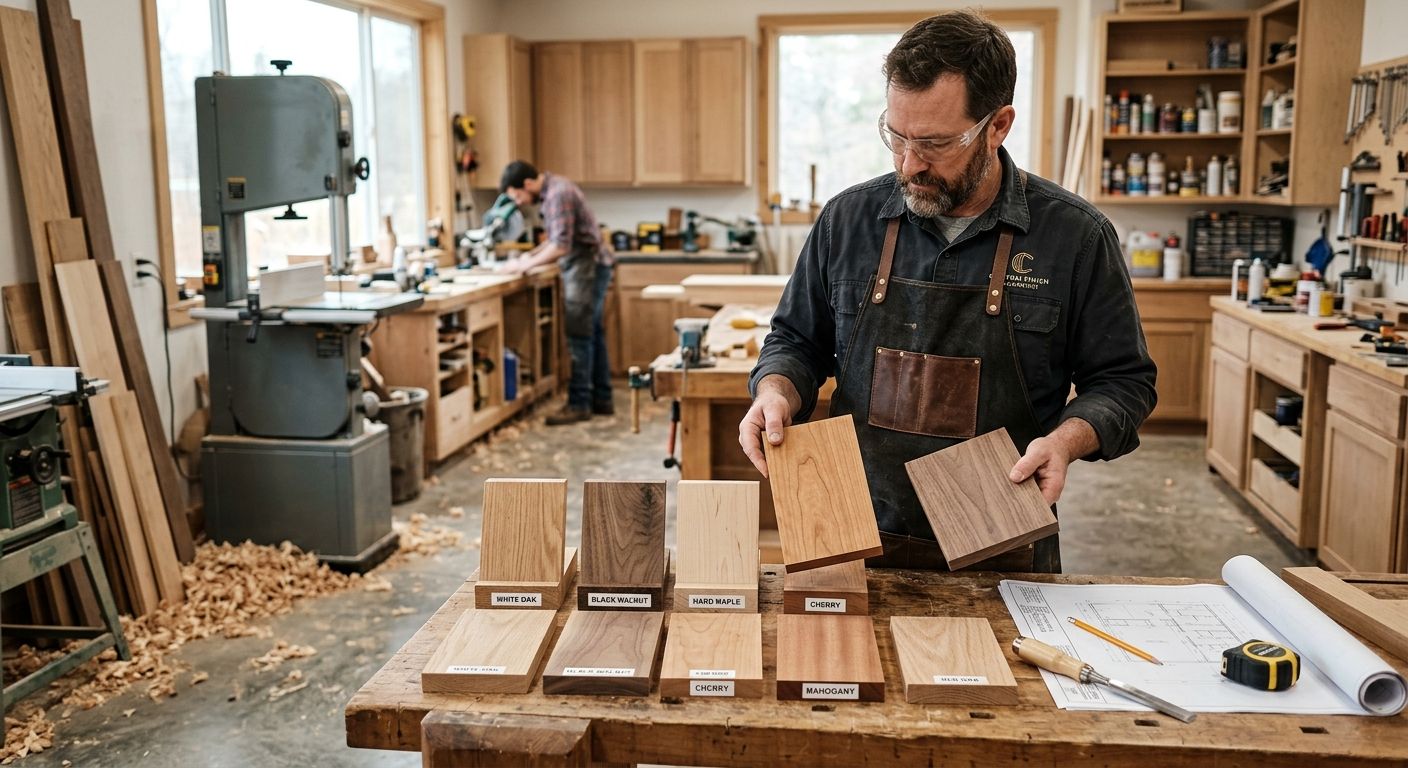
10. Finish Carpentry Improves Longevity and Durability
Kitchens experience heavy daily use. Finish carpentry details must be built accordingly.
Quality craftsmanship ensures:
- Strong joints that resist movement
- Durable materials that withstand moisture
- Proper fastening for long-term stability
- Reduced maintenance and repairs
Builder-grade shortcuts often show wear quickly. Custom work is designed for long-term performance.
11. Finish Details Increase Resale Appeal
Buyers notice kitchens first. But what impresses them most isn’t just appliances — it’s how the kitchen feels.
Finish carpentry:
- Signals quality construction
- Makes kitchens feel custom rather than generic
- Reduces visible wear and flaws
- Creates emotional connection
Homes with well-finished kitchens consistently photograph better and show stronger buyer interest.
12. Finish Carpentry Makes the Kitchen Feel Finished
Perhaps most importantly, finish carpentry completes the kitchen.
It eliminates:
- Awkward transitions
- Unfinished edges
- Gaps between design elements
- Visual clutter
The result is a kitchen that feels intentional, cohesive, and complete — not just upgraded.
The Best Kitchens Are Built, Not Assembled
A truly great kitchen isn’t defined by cabinets and countertops alone. It’s defined by how every detail works together — trim, storage, architecture, and craftsmanship.
At
Blackhills Finish Carpentry, we believe kitchens deserve the same level of finish attention as living rooms and entryways. That belief shows in every project we build.
Ready to Elevate Your Kitchen Design?
If you’re planning a kitchen upgrade and want it to feel cohesive, durable, and truly custom, we’d love to help.
Call: (605) 381-0298
Email: bfaehnrich6@yahoo.com
Serving: Hill City, Rapid City & the Black Hills
Hours: Monday – Friday, 7am – 5pm
Let’s build a kitchen that feels as good as it looks.