

How Finish Carpentry Improves Comfort by Reducing Noise and Echo in Your Home
Reduce Noise with Finish Carpentry

When homeowners think about improving comfort, they often focus on temperature, lighting, or furniture. But one of the most overlooked factors in how a home feels day to day is sound. Echoing rooms, loud footsteps, hollow walls, and noise traveling between spaces can make even a beautiful home feel uncomfortable.
What many people don’t realize is that finish carpentry plays a major role in controlling sound. Trim details, built-ins, paneling, doors, and wood features all influence how sound moves through a space.
At Blackhills Finish Carpentry, we’ve worked in homes throughout Hill City, Rapid City, and the Black Hills where homeowners wanted quieter, calmer interiors — especially in open-concept layouts and multi-level homes. Thoughtful finish carpentry solutions can dramatically reduce echo, soften noise, and improve overall livability.
Here’s how it works.
1. Why Modern Homes Often Sound Louder Than Older Homes
Many newer homes feature:
- Open floor plans
- Hard flooring surfaces
- Tall ceilings
- Minimal trim
- Large windows
- Fewer walls
While these elements look modern and clean, they often create acoustical challenges. Sound reflects off hard surfaces instead of being absorbed, causing echo, reverberation, and noise travel between rooms.
Older homes often feel quieter because they include:
- Heavier trim
- More wall articulation
- Built-in cabinetry
- Smaller room divisions
- Softer architectural details
Finish carpentry helps restore balance by adding structure and texture that naturally absorbs and diffuses sound.
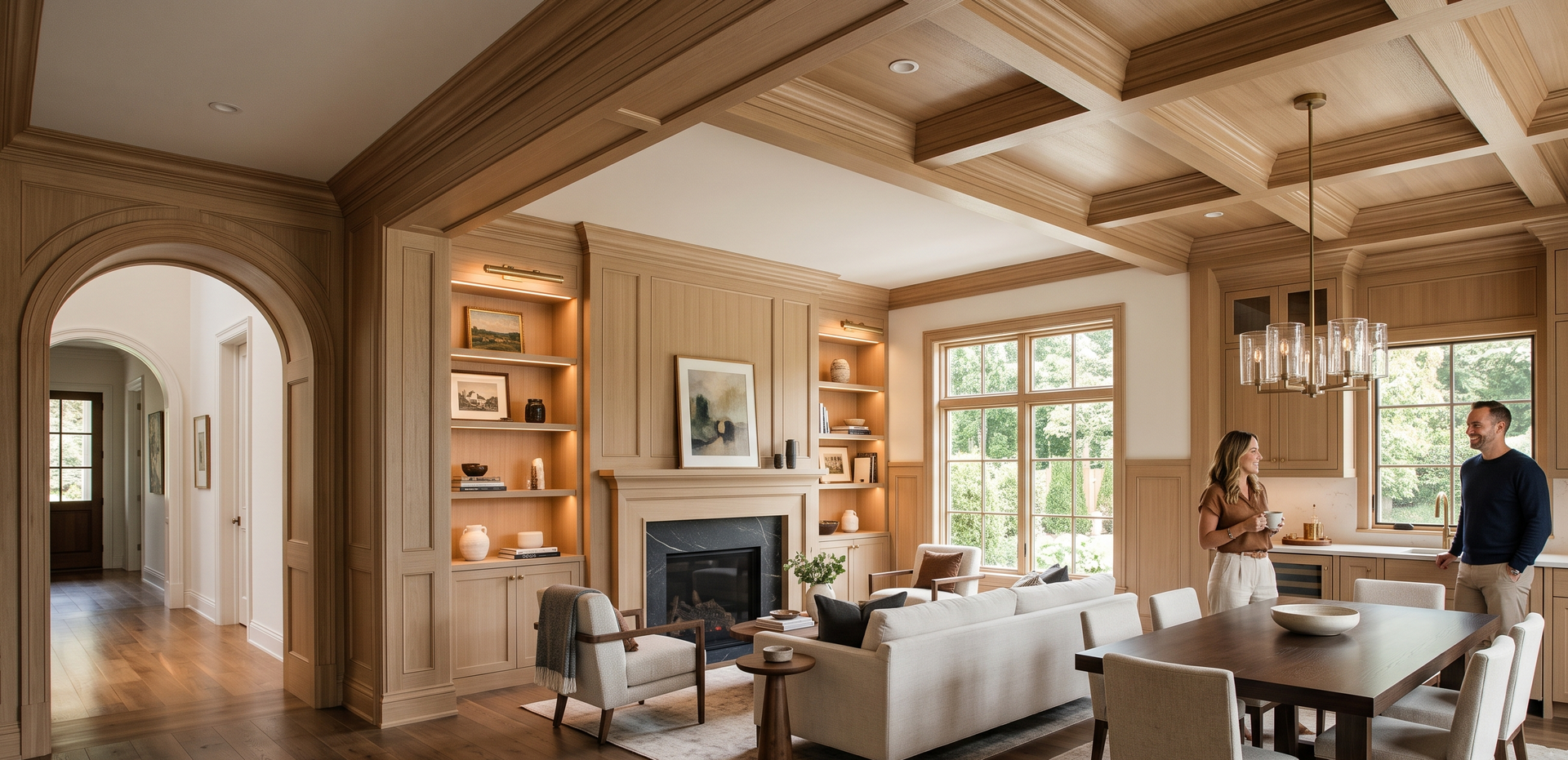
2. Built-Ins Absorb and Break Up Sound Waves
One of the most effective ways to reduce echo is through custom built-ins. Flat, empty walls allow sound to bounce freely. Built-ins interrupt those sound paths.
Custom shelving, cabinetry, and media walls:
- Add depth and surface variation
- Break up large flat wall areas
- Reduce sound reflection
- Absorb vibration through solid materials
A wall of built-in shelving filled with books or décor absorbs sound far better than drywall alone. Media walls with cabinetry reduce TV echo and improve sound quality within the room.
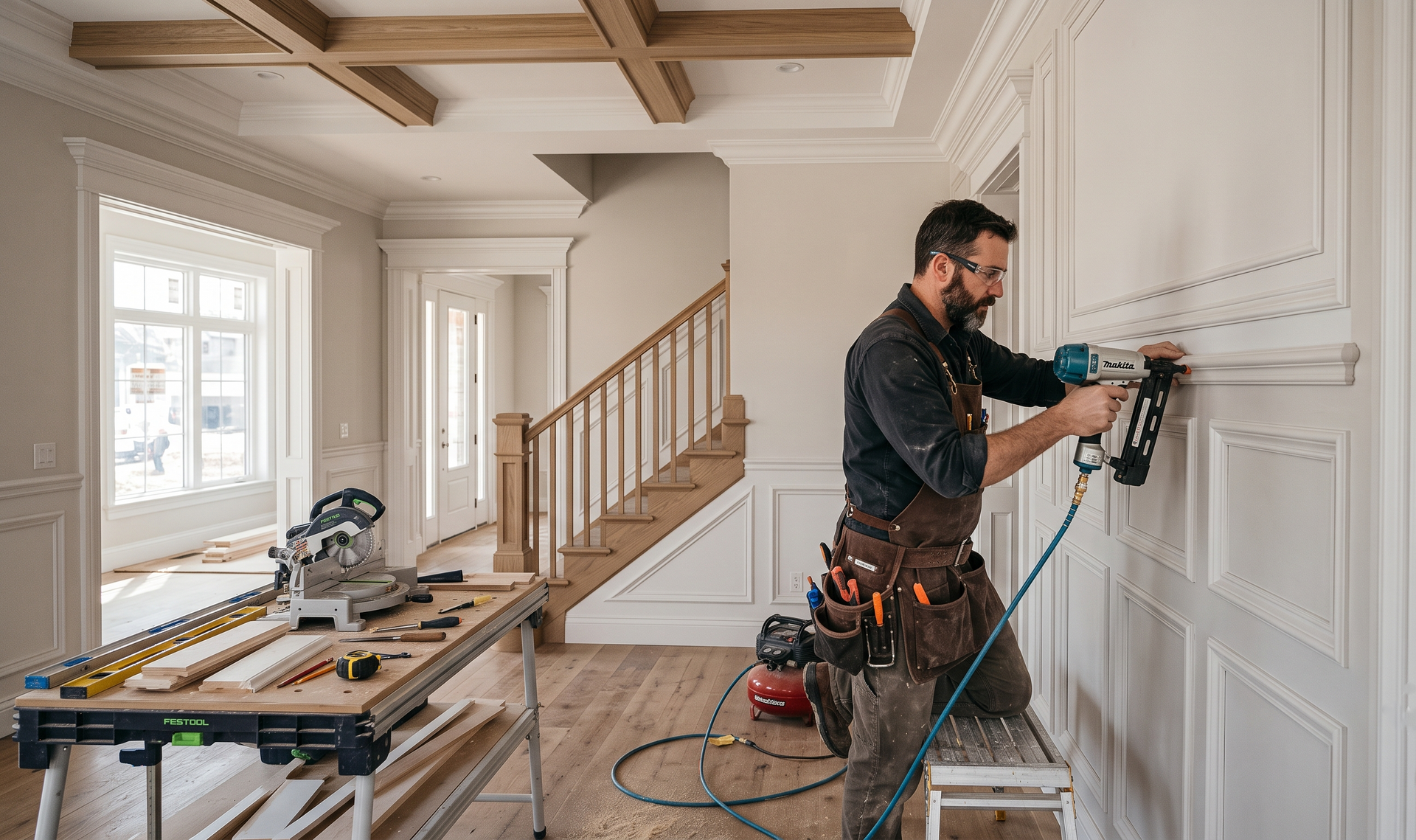
3. Wall Paneling Softens Echo in Large Rooms
Wall treatments aren’t just decorative — they play a significant role in acoustics.
Finish carpentry options like:
- Wainscoting
- Board and batten
- Shiplap
- Tongue-and-groove paneling
- Fluted or reeded panels
All help reduce echo by adding texture and breaking up sound reflection.
In dining rooms, living rooms, hallways, and stairwells, paneling can dramatically improve how sound behaves without sacrificing design.
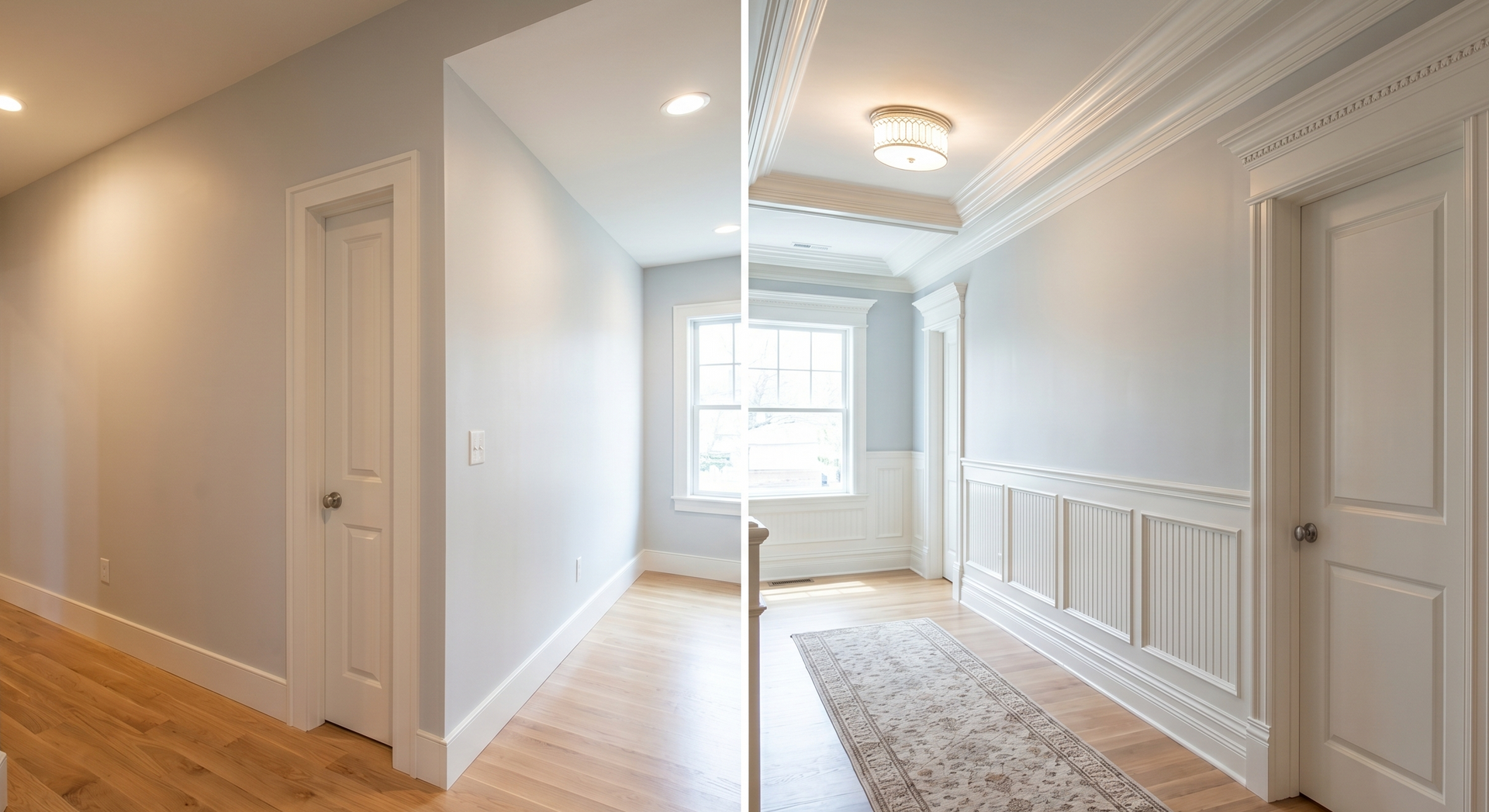
4. Trim Details Reduce Hollow Sound
Minimalist trim looks clean, but extremely thin trim contributes to hollow-sounding rooms.
Upgraded trim details:
- Taller baseboards
- Wider casing
- Crown molding
- Coffered or beam-accented ceilings
Add mass and articulation that subtly absorb sound. Crown molding, in particular, helps soften the transition between walls and ceilings — reducing echo in rooms with tall ceilings.
5. Doors and Casings Matter More Than You Think
Sound travels easily through gaps around doors. Builder-grade doors and trim often leave small gaps that allow noise to pass freely.
Finish carpentry improves sound control by:
- Installing solid-core interior doors
- Ensuring proper door alignment
- Tightening casing installation
- Reducing gaps around frames
Solid-core doors paired with quality casing significantly reduce noise transfer between bedrooms, offices, and living areas.
6. Staircases Are Major Sound Pathways
Staircases often act like sound funnels, carrying noise between levels. Finish carpentry can dramatically reduce this effect.
Sound-reducing staircase upgrades include:
- Properly trimmed stringers and risers
- Enclosed stair walls with paneling
- Under-stair storage or cabinetry
- Solid treads and risers instead of hollow construction
Enclosing and finishing staircases not only improves safety and aesthetics but also reduces noise travel between floors.
7. Ceiling Treatments Improve Acoustic Balance
Ceilings are one of the largest reflective surfaces in a home.
Finish carpentry options such as:
- Exposed beams
- Box beams
- Coffered ceilings
- Tongue-and-groove ceilings
Add depth and variation that reduce echo. Even faux beams can make a noticeable difference by breaking up sound reflection paths.
These treatments are especially helpful in open living spaces and great rooms.
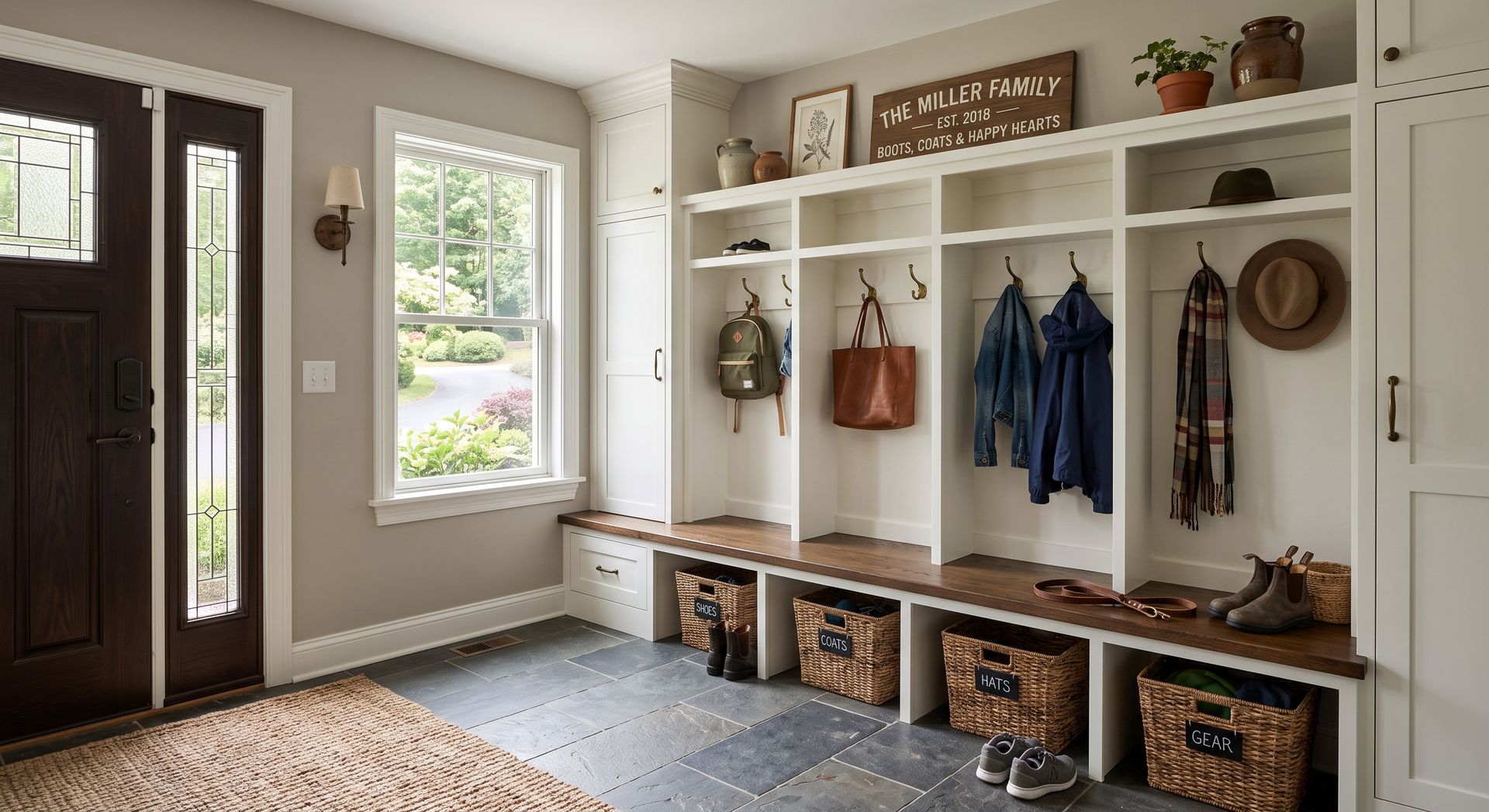
8. Built-In Seating and Storage Reduce Noise Naturally
Window seats, benches, and built-in seating provide two acoustic benefits:
- They absorb sound through padding and structure
- They reduce the need for freestanding furniture that reflects sound
Many built-in benches also include storage, which adds mass and reduces vibration.
These features are especially useful in:
- Dining areas
- Entryways
- Reading nooks
- Bedrooms
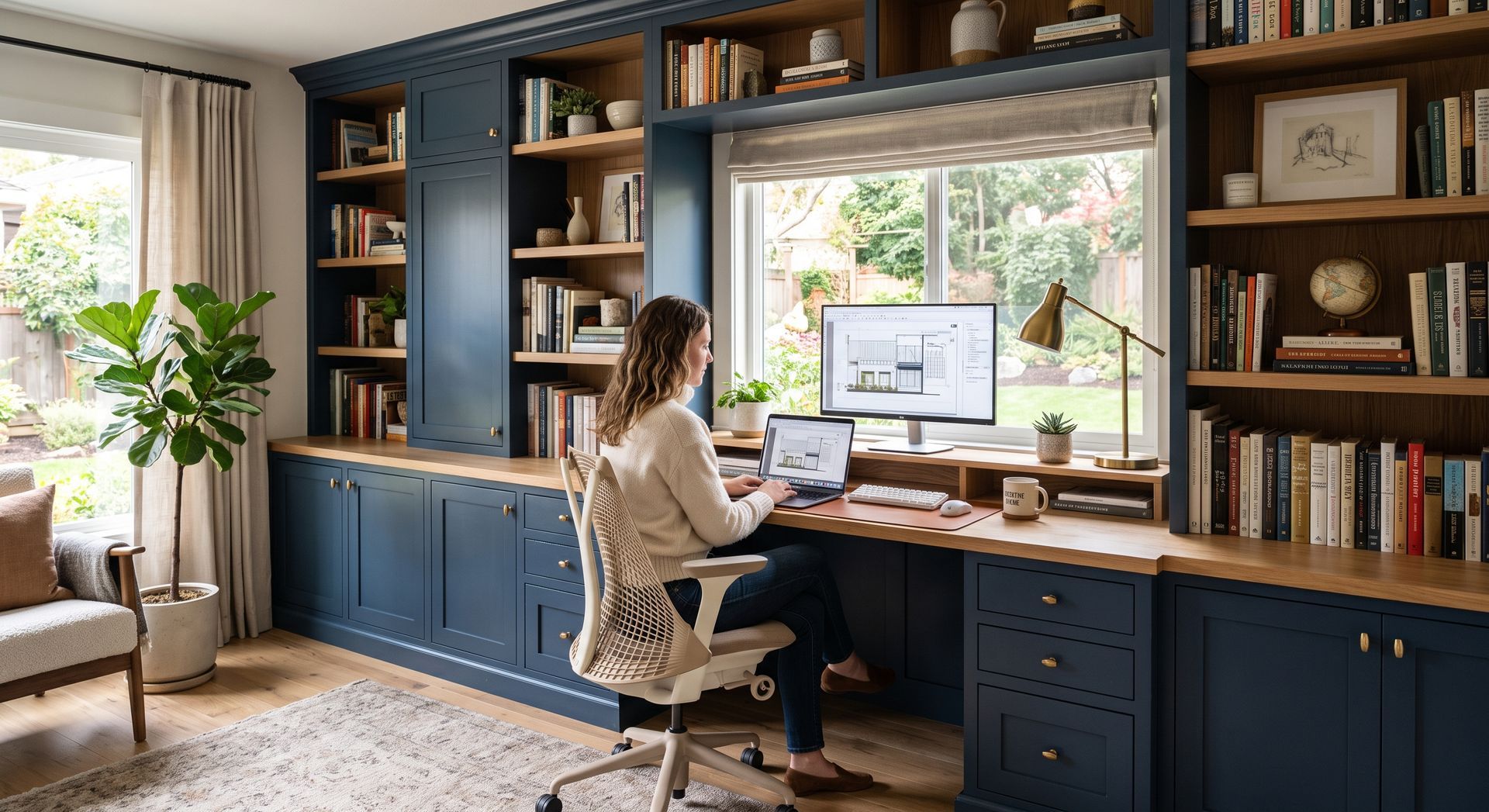
9. Finish Carpentry Improves Home Office Acoustics
As more homeowners work from home, sound control has become essential.
Finish carpentry helps home offices by:
- Reducing echo during calls
- Minimizing noise transfer from other rooms
- Improving speech clarity
- Creating quieter, more focused environments
Built-in desks, shelving, and wall treatments reduce the hollow sound common in spare bedrooms converted to offices.
10. Acoustic Comfort Improves Daily Living
A quieter home feels calmer, more private, and more comfortable.
Benefits homeowners notice after finish upgrades include:
- Less echo during conversations
- Reduced TV noise bleed
- Quieter bedrooms
- Improved focus in workspaces
- A more relaxed atmosphere
These improvements often go unnoticed until they’re experienced — but once homeowners feel the difference, it becomes one of their favorite aspects of the upgrade.
11. Finish Carpentry Offers a Design-First Solution
Unlike acoustic panels or specialty soundproofing materials, finish carpentry improves acoustics without sacrificing style.
It blends seamlessly into the architecture of your home while delivering functional benefits that last.
This makes it an ideal solution for homeowners who want better sound control without making their home feel technical or commercial.
Comfort Is About More Than What You See
Finish carpentry doesn’t just change how your home looks — it changes how it feels. By improving acoustics, it enhances comfort, privacy, and livability in ways many homeowners never expect.
At Blackhills Finish Carpentry, we design finish solutions that address both beauty and performance — because the best homes feel as good as they look.
Ready to Improve Comfort in Your Home?
Call: (605) 381-0298
Email: bfaehnrich6@yahoo.com
Serving: Hill City, Rapid City & the Black Hills
Hours: Monday – Friday, 7am – 5pm
Let’s create spaces that sound quieter, feel calmer, and work better for everyday living.