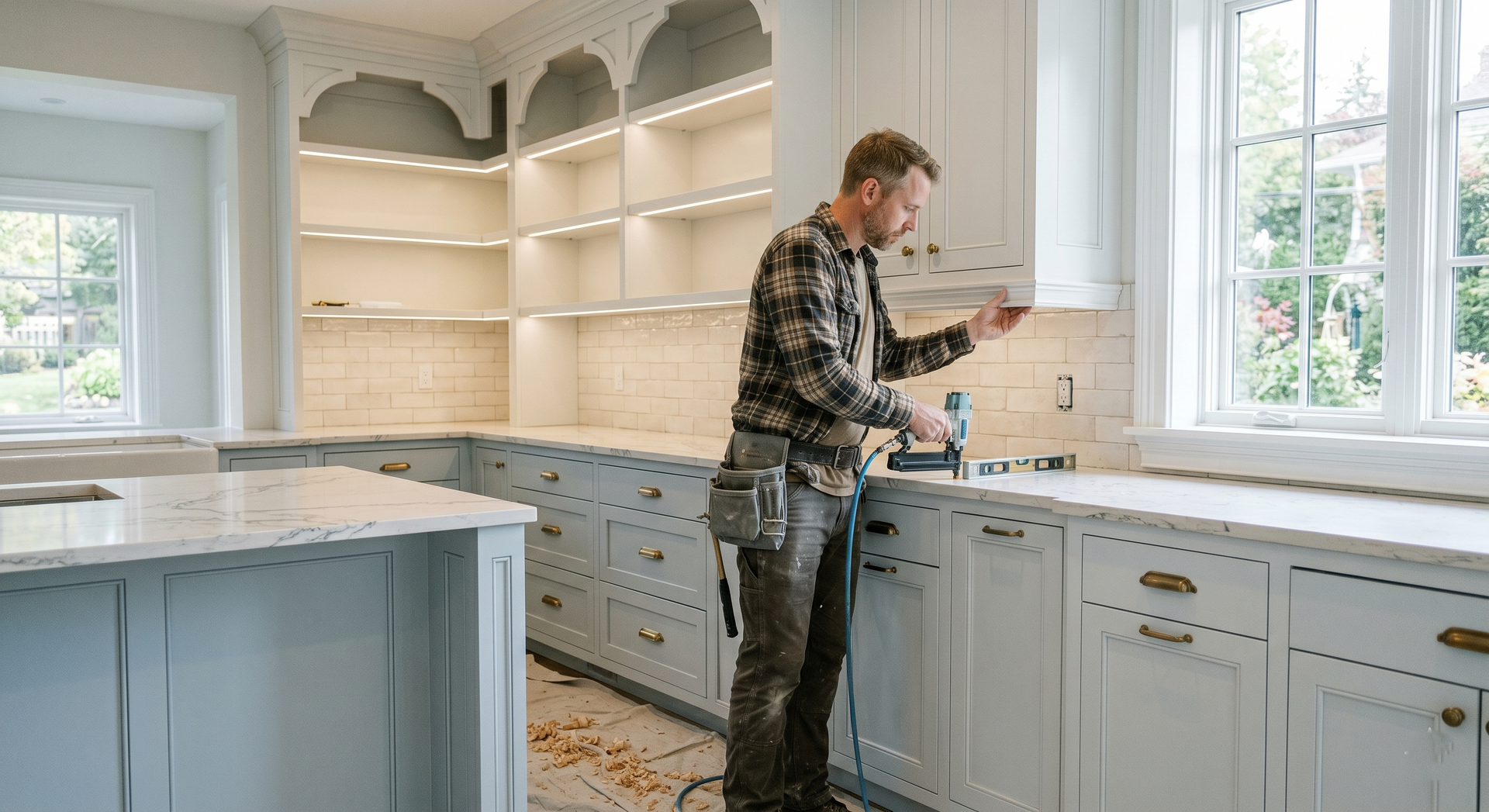
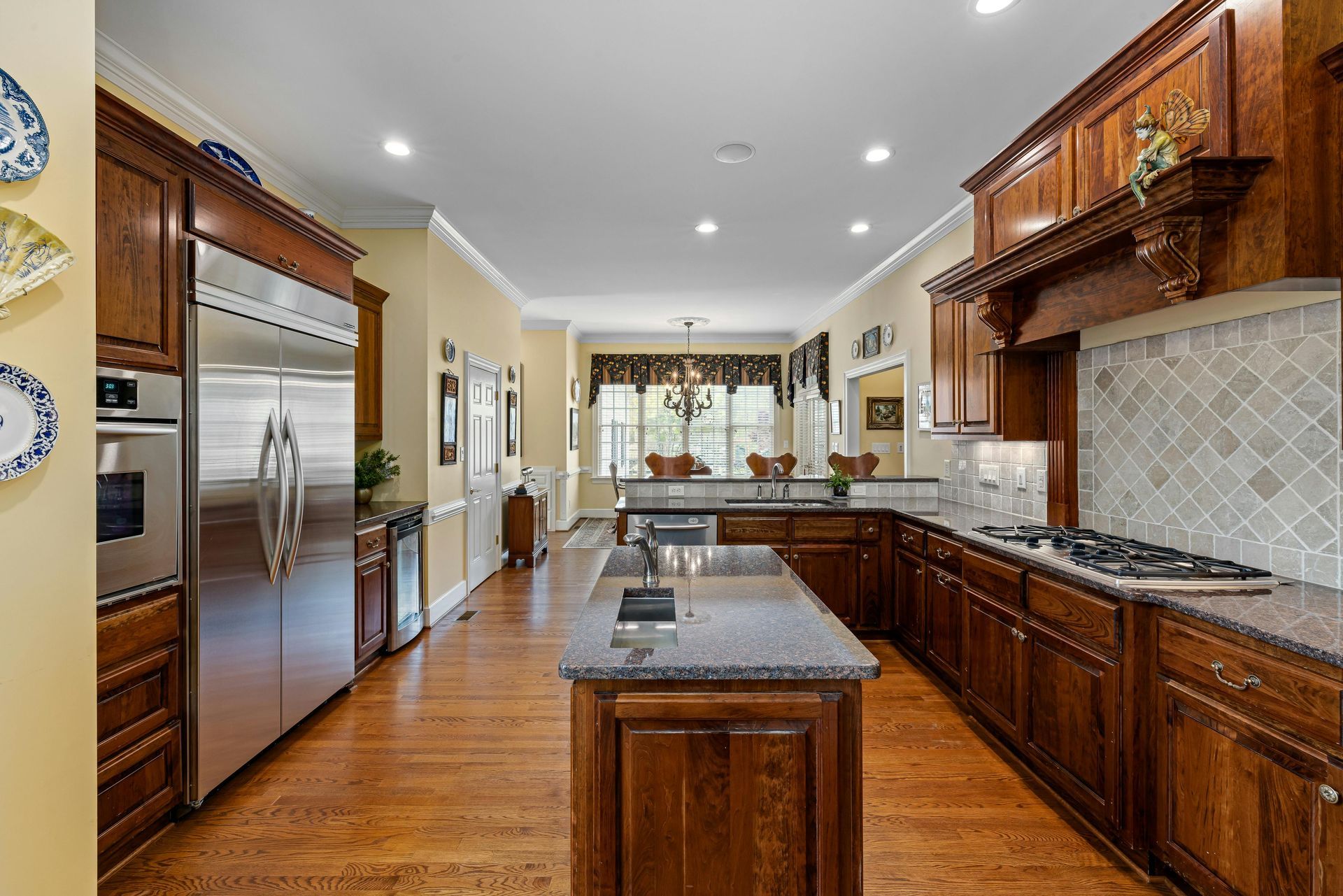
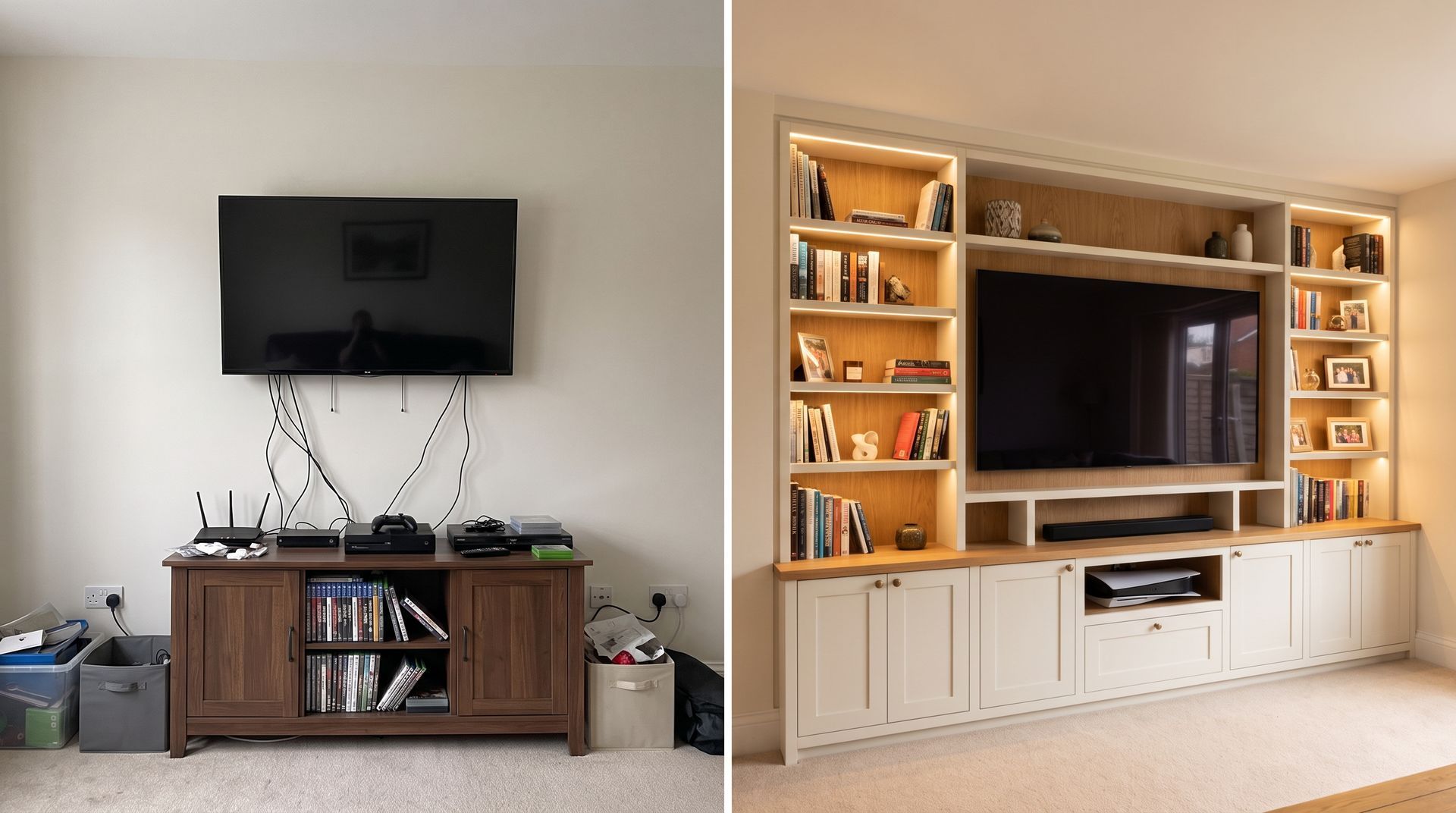
The Difference Between Builder-Grade and Custom Finish Carpentry
Builder-Grade vs Custom Finish Carpentry

Many homeowners don’t realize how much finish carpentry affects the overall quality of their home until they live with it for a while. Doors that feel flimsy, trim that cracks or separates, cabinets that don’t quite line up — these are often signs of builder-grade finish work.
At first glance, builder-grade carpentry can look acceptable. But over time, the differences between standard installation and custom finish carpentry become impossible to ignore.
At Blackhills Finish Carpentry, we’ve spent more than 25 years working in homes throughout Hill City, Rapid City, and the Black Hills, often upgrading or correcting builder-grade finishes. Here’s what homeowners should understand about the difference — and why it matters far more than most people expect.
1. What Builder-Grade Finish Carpentry Really Means
Builder-grade finish carpentry is designed to meet minimum standards while keeping construction costs low. It prioritizes speed and efficiency over craftsmanship and longevity.
Common characteristics include:
- Thin baseboards and casing
- Limited trim profiles
- MDF or composite materials
- Minimal attention to alignment
- Heavy reliance on caulk
- Fast installation by multiple crews
Builder-grade work isn’t necessarily “wrong” — but it is optimized for volume, not precision
2. Material Quality: The Foundation of the Difference
One of the most significant differences lies in the materials themselves.
Builder-grade materials often include:
- Low-density MDF
- Particleboard shelving
- Hollow or semi-hollow trim
- Thin veneers
- Budget hardware
Custom finish carpentry uses:
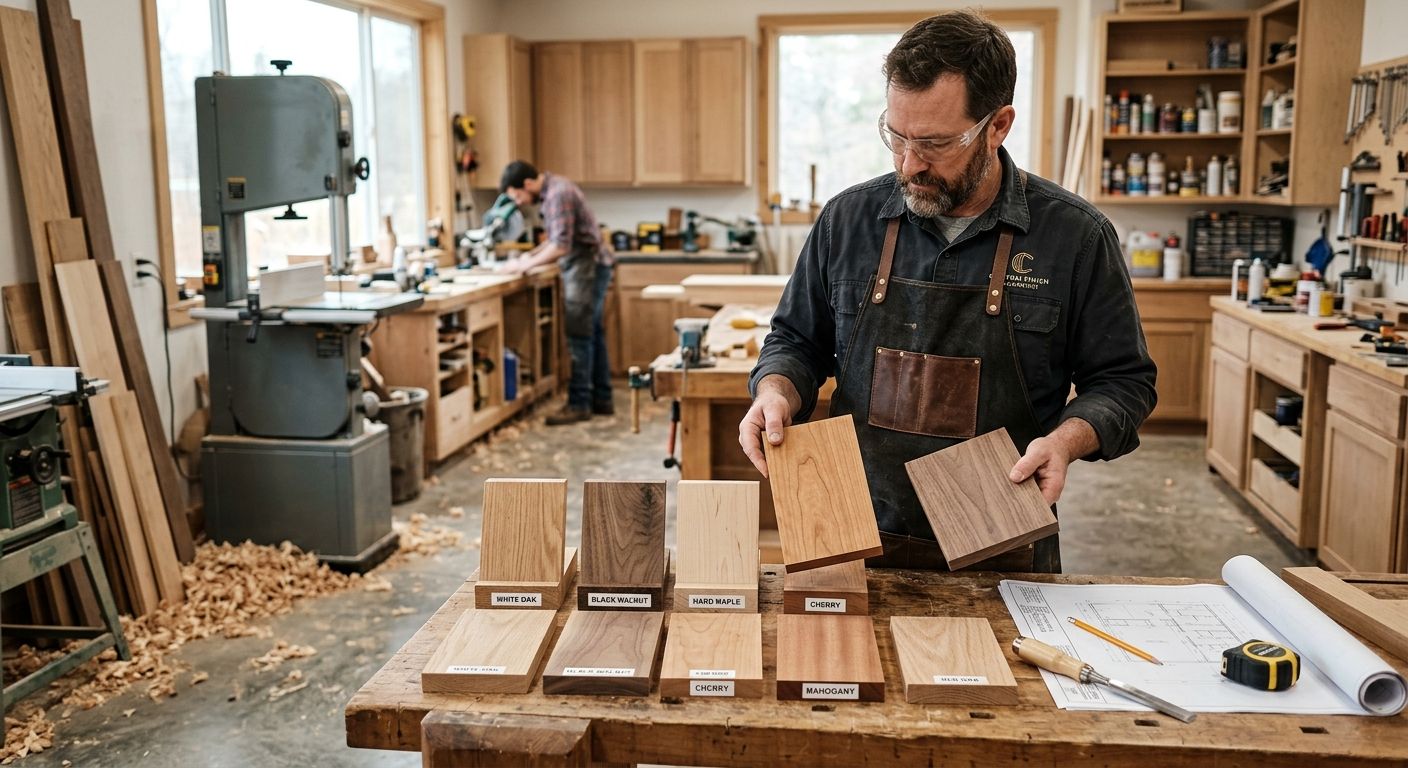
- Solid hardwoods or premium MDF
- Furniture-grade plywood
- Stable, moisture-resistant materials
- High-quality hinges, slides, and fasteners
In South Dakota’s climate, where humidity and temperature swing dramatically, material quality plays a major role in how well finishes hold up over time.
3. Installation Speed vs Precision
Builder-grade finish work is often installed under tight deadlines. Crews are expected to move quickly to keep projects on schedule.
This leads to:
- Less time spent leveling and aligning
- Inconsistent reveals
- Gaps filled with caulk rather than proper fitting
- Minimal customization for room irregularities
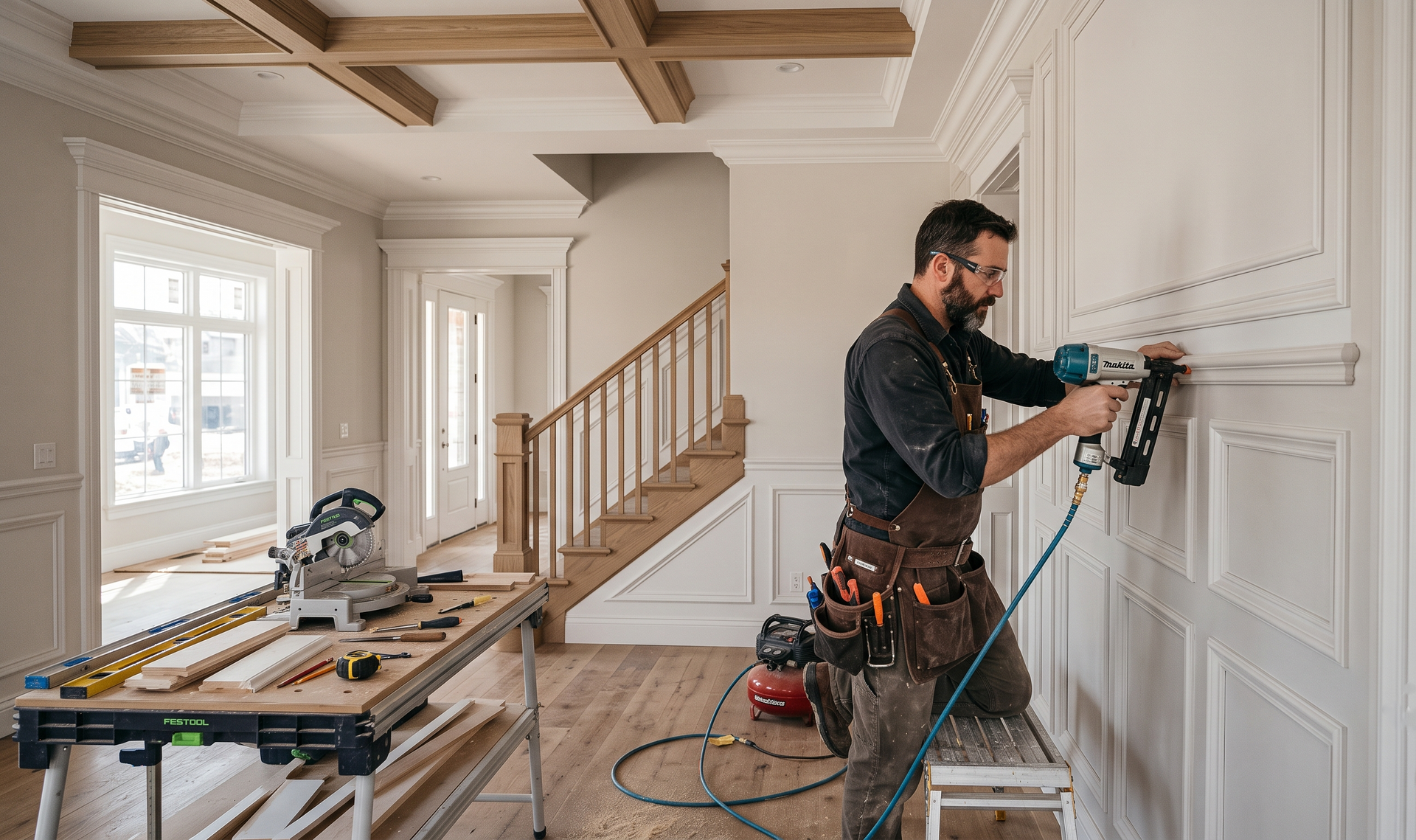
Custom finish carpentry slows the process down intentionally.
Precision installation includes:
- Careful measuring and layout
- Individual fitting for each room
- Adjustments for uneven walls and floors
- Clean joints that don’t rely on caulk to hide flaws
The difference shows immediately — and even more so after years of use.
4. Trim Proportions and Visual Impact
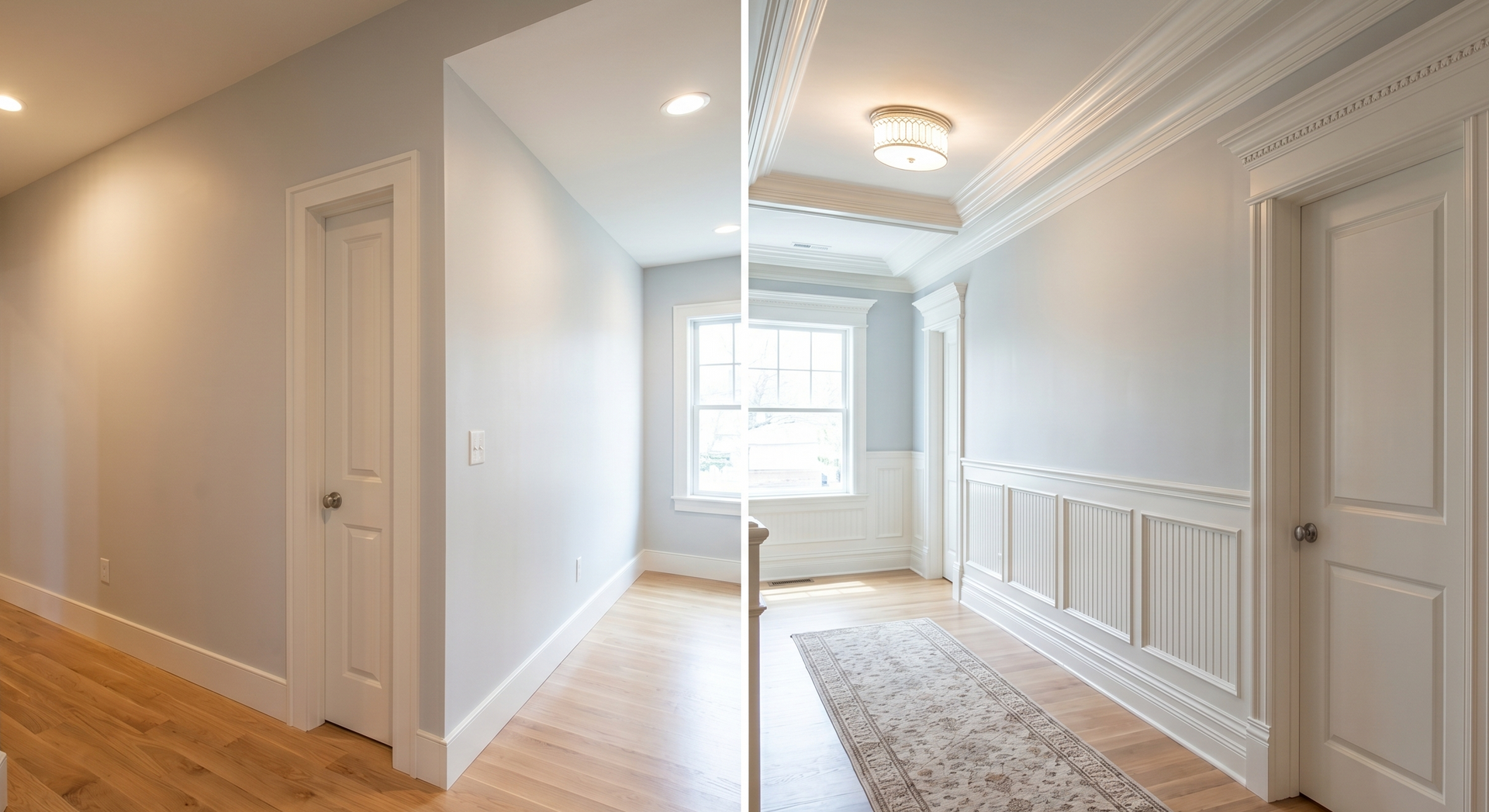
Builder-grade trim is typically undersized. Thin baseboards and narrow casing were chosen to reduce material cost and speed installation.
The result is:
- Rooms that feel flat or unfinished
- Weak transitions between surfaces
- A lack of architectural presence
Custom trim is selected based on:
- Ceiling height
- Room size
- Architectural style
- Desired visual weight
Taller baseboards, properly scaled casing, and balanced crown molding give rooms structure and depth — something builder-grade trim rarely achieves.
5. Consistency Throughout the Home
Builder-grade homes often show inconsistency:
- Different trim profiles between rooms
- Mismatched casing sizes
- Uneven baseboard heights
- Transitions that don’t line up
This happens because multiple crews may work on different phases, or substitutions are made to save time or cost.
Custom finish carpentry prioritizes consistency:
- One trim profile family throughout
- Aligned horizontal lines across rooms
- Matching transitions between spaces
- A cohesive, intentional design
That consistency is one of the main reasons custom-finished homes feel more refined.
6. Cabinets: Boxes vs Furniture
Builder-grade cabinetry is designed to be functional at the lowest possible cost.
Common traits include:
- Particleboard boxes
- Stapled or cam-locked joints
- Shallow drawers
- Limited storage customization
- Basic hardware
Custom cabinetry is built more like furniture.
Features often include:
- Solid wood or plywood boxes
- Reinforced joinery
- Full-extension drawers
- Soft-close hardware
- Storage designed around how you actually use the space
The difference in durability and usability becomes clear within the first few years.
7. Built-Ins: Rare in Builder-Grade Homes
Builder-grade homes rely heavily on freestanding furniture because it’s cheaper and faster than building custom features.
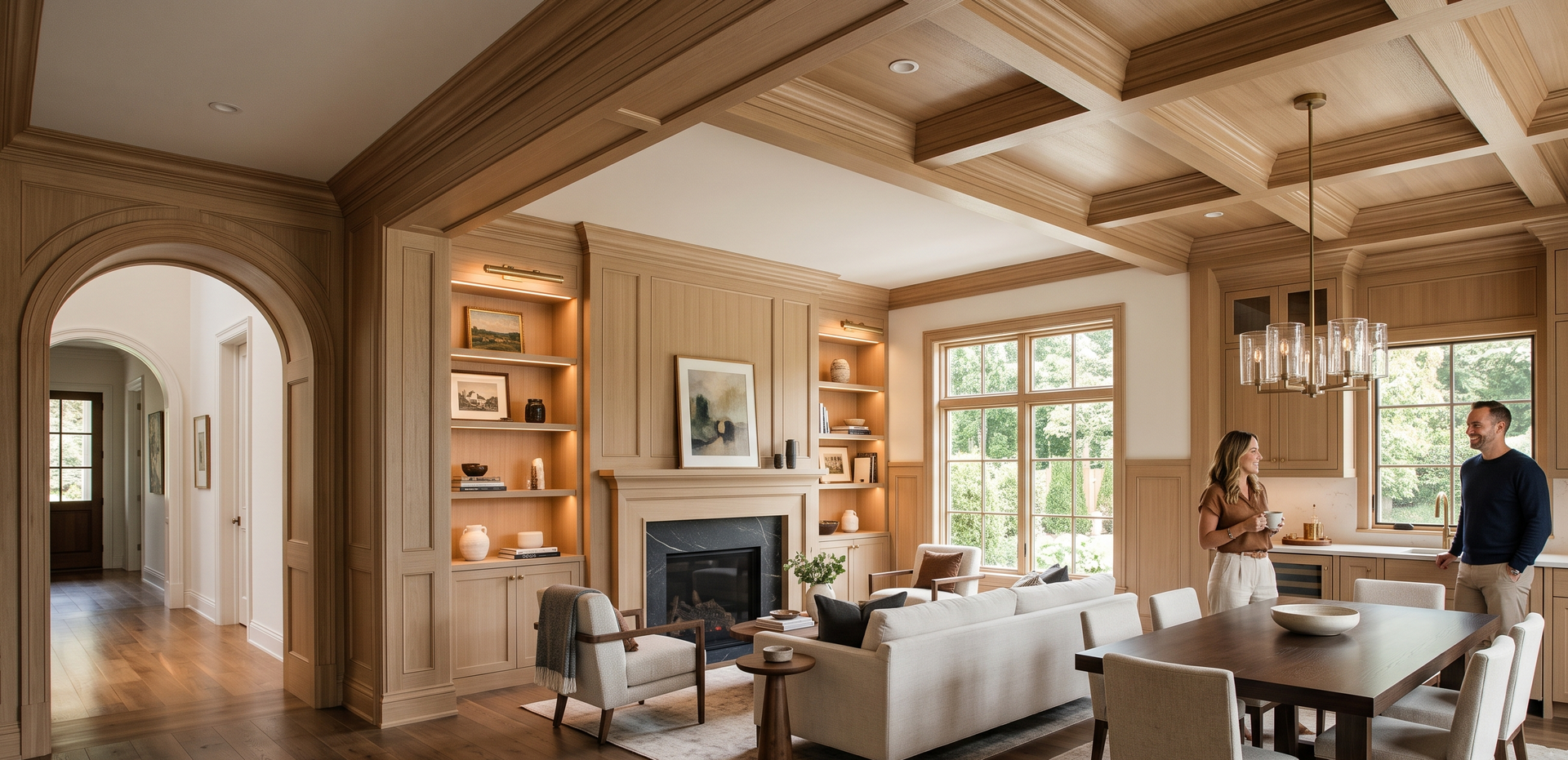
Custom finish carpentry introduces:
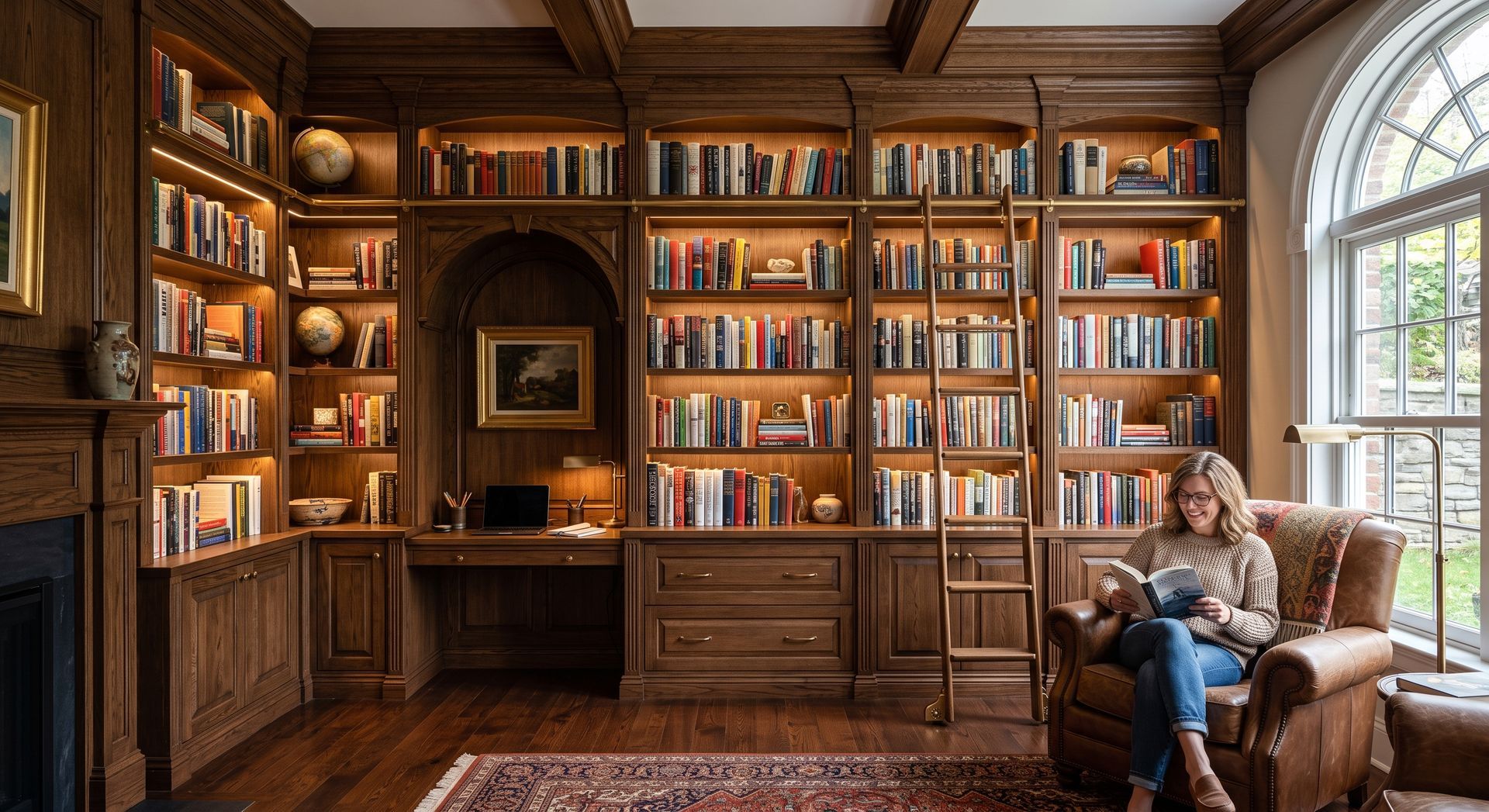
- Built-in shelving
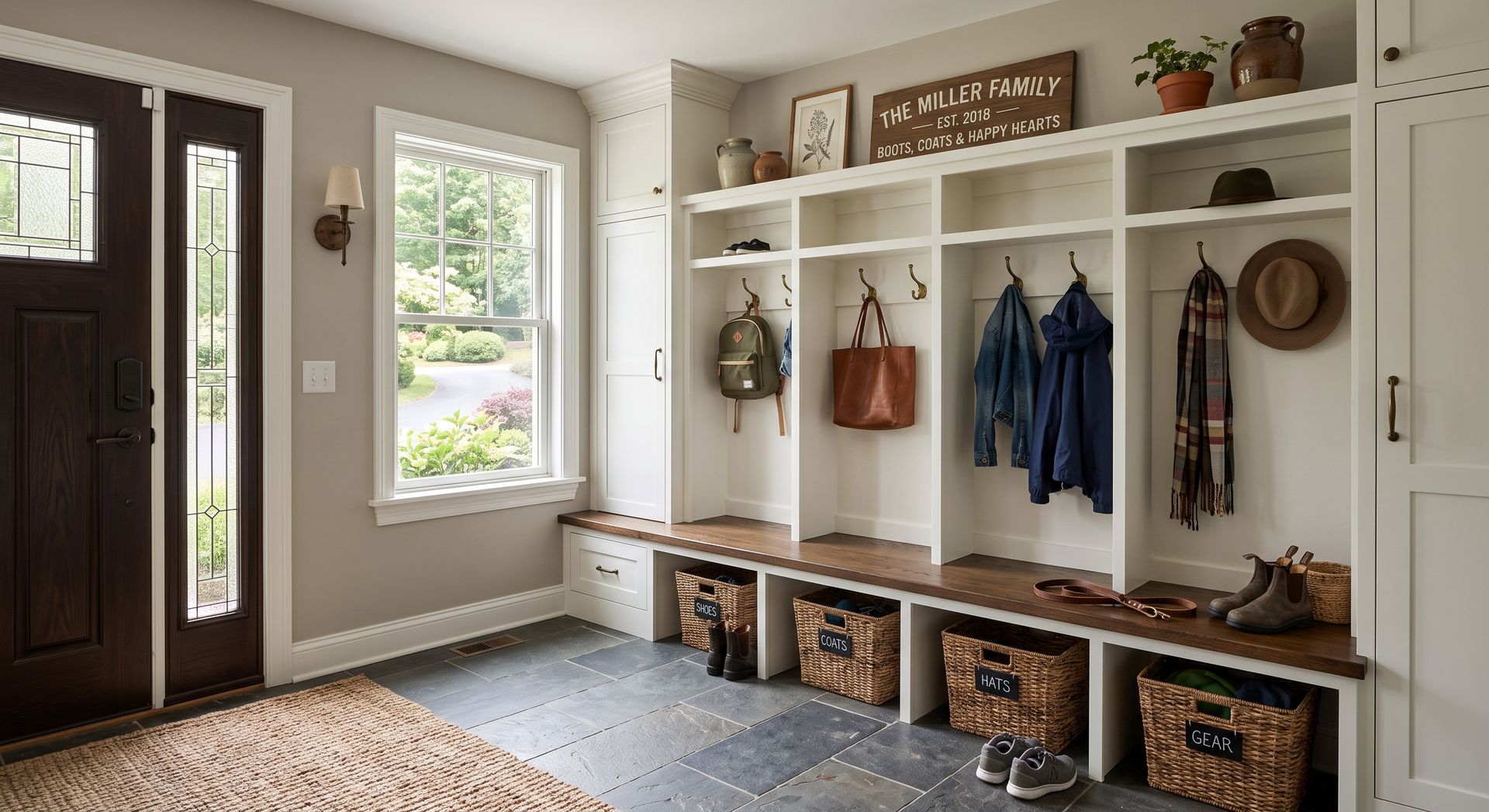
- Mudroom lockers
- Window seats
- Media walls
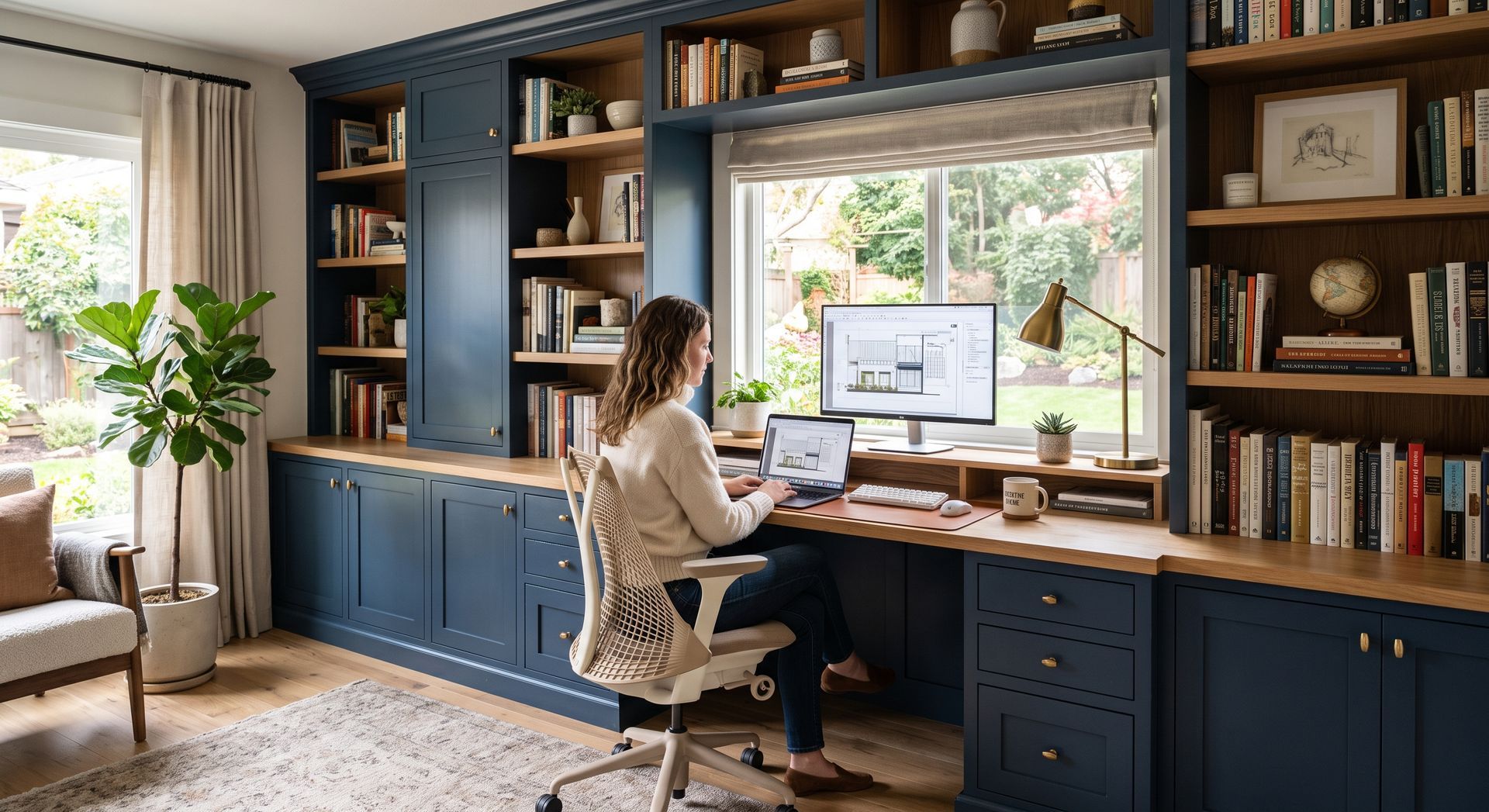
- Office cabinetry
These features:
- Increase usable storage
- Reduce clutter
- Add resale value
- Make spaces feel intentional and permanent
Built-ins are one of the clearest signs of custom craftsmanship.
8. How Builder-Grade Work Ages Over Time
Many builder-grade finishes look acceptable at move-in but begin to show problems within a few years.
Common aging issues include:
- Cracked joints
- Swollen MDF near floors
- Doors that go out of alignment
- Sagging shelves
- Separating trim
Custom finish carpentry is designed to age gracefully by accounting for:
- Seasonal wood movement
- Structural settling
- Daily use
- Long-term durability
This results in fewer repairs and longer-lasting beauty.
9. Repair vs Upgrade: Why Many Homeowners Replace Builder-Grade Finishes
Homeowners often reach a point where patching builder-grade finishes no longer makes sense.
They find themselves:
- Re-caulking the same joints repeatedly
- Touching up chipped trim
- Fighting with cabinet doors and drawers
- Feeling dissatisfied with the overall look
Upgrading to custom finish carpentry solves these problems at the source rather than masking them temporarily.
10. Custom Finish Carpentry Adds Identity to a Home
Builder-grade homes often feel interchangeable. Custom carpentry gives a home character.
It reflects:
- Personal style
- Pride of ownership
- Thoughtful design
- Craftsmanship
Custom finishes make a home feel built — not assembled.
11. The Cost Difference in Perspective
While custom finish carpentry costs more upfront, it often costs less over the lifetime of the home.
Builder-grade work may require:
- Repairs
- Replacement
- Frequent maintenance
- Eventual upgrades
Custom carpentry:
- Lasts longer
- Requires less upkeep
- Adds resale value
- Improves daily enjoyment
When viewed long-term, the investment makes sense.
Builder-Grade Is the Starting Point — Custom Is the Standard
Builder-grade finish carpentry provides a baseline. Custom finish carpentry raises the standard.
If you want a home that:
- Feels cohesive
- Ages well
- Functions better
- Reflects quality craftsmanship
Custom finish carpentry is the clear choice.
Ready to Upgrade Beyond Builder-Grade?
At Blackhills Finish Carpentry, we specialize in transforming builder-grade interiors into refined, durable spaces built with intention and precision.
Call: (605) 381-0298
Email: bfaehnrich6@yahoo.com
Serving: Hill City, Rapid City & the Black Hills
Hours: Monday – Friday, 7am – 5pm
Let’s elevate your home with finish carpentry that truly stands apart.